
Views: 0 Author: Site Editor Publish Time: 2025-08-25 Origin: Site


Why do some valves fail under pressure while others last for years? The secret often lies in choosing the right type. Ball valves play a key role in controlling flow in many industries. But not all ball valves are the same.In this post, you’ll learn the different types of ball valves, their uses, parts, and how to pick the best one.
A ball valve is a type of valve used to control the flow of liquids, gases, or vapors in a pipeline. The valve consists of a spherical ball with a hole in the center, which rotates to either allow or block the flow. This is known as a "quarter-turn" valve because it only requires a 90-degree turn to open or close.
The ball sits within two seats, and when the valve is open, the hole in the ball aligns with the pipeline, allowing fluid to flow freely. When the valve is closed, the hole in the ball is perpendicular to the flow direction, blocking any movement of the fluid. This simple but effective design makes ball valves widely used across industries.
Ball valves are used in various industries, from oil and gas to water treatment, HVAC, and beyond.
1. Oil & Gas Industry
a. Upstream: Ball valves are used to regulate the flow of oil and gas at extraction sites.
b. Midstream: They help protect pipelines and equipment, ensuring safety during transportation.
c. Downstream: Ball valves are involved in refining and distributing processed oil and gas.
2. Water Treatment & HVAC
a. Ball valves play a key role in regulating the flow of water and air in treatment plants and heating systems.
b. They are also used in residential and commercial heating, ventilation, and air conditioning (HVAC) systems.
These versatile valves are essential for maintaining safe, efficient, and controlled fluid flow across these industries.
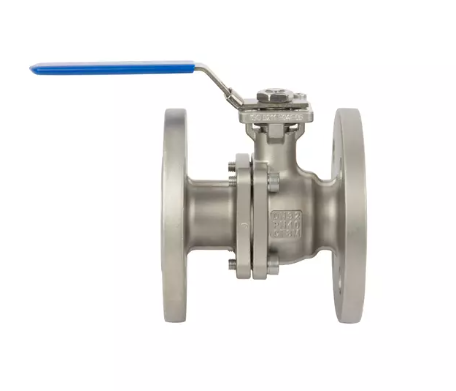
A ball valve consists of several key components that work together to ensure efficient fluid control:
● Valve Body: This is the outer casing that holds all the internal components in place. It is typically made from metals like stainless steel, or sometimes thermoplastics for specific applications.
● Ball: The central component that rotates to control flow. It can either be solid or hollow, depending on the design and application requirements.
● Seat: The material (often PTFE or elastomers) that forms a seal around the ball when the valve is closed. It prevents leakage by ensuring a tight seal.
● Shaft: This connects the ball to the actuator. It is the mechanism that rotates the ball in response to manual or automated control.
● Bonnet: The bonnet is the cover over the shaft and packing. It ensures that the fluid doesn’t leak out where the shaft connects to the valve.
● Actuator: The actuator controls the movement of the ball. It can be manual (like a lever or handwheel) or automated (pneumatic or electric actuators).
Ball valves offer several advantages, making them ideal for a wide range of applications:
1. Quick Operation: These valves only require a 90-degree turn to fully open or close, making them fast and easy to operate.
2. Tight Sealing: Ball valves are known for their bubble-tight shutoff, which means they can stop the flow of liquids, gases, or vapors without leakage.
3. Durability and Reliability: Due to their simple design and materials, ball valves are highly durable and reliable in a variety of industrial settings.
Despite their many benefits, ball valves do have some limitations. These should be considered when selecting the right valve for your application:
1. Not Suitable for High-Viscosity Fluids: Ball valves are less effective for fluids that are thick or sticky, as the ball can have difficulty rotating and creating a proper seal.
2. Not Ideal for High-Pressure Applications: While some ball valves are designed for high pressure, they are not as effective as other valves like gate or globe valves in extremely high-pressure environments.
3. Limited Flow Control: In some situations, ball valves are not ideal for fine flow control since they are either fully open or fully closed.
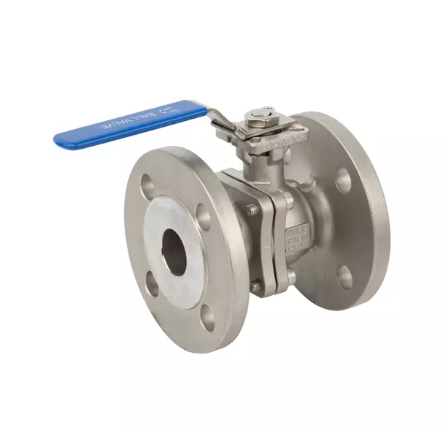
Full port ball valves are designed to have a ball with the same diameter as the pipeline. This allows the fluid to flow through the valve without any significant restriction or pressure drop. These valves are ideal for situations where unrestricted flow is important, such as in pipelines with high flow rates.
● Advantages: Minimal pressure drop, less friction, and more efficient flow.
● Best Applications: Large-scale applications like oil and gas pipelines, water treatment systems, and other industries requiring smooth, unrestricted flow.
Standard port ball valves are smaller than full port valves. The ball is slightly smaller than the pipeline, which causes more friction and restricts flow. These valves are typically used in applications where full flow isn't necessary but cost-effectiveness and space-saving are priorities.
● Advantages: Cost-effective and compact.
● Best Applications: Applications requiring moderate flow control, such as residential plumbing, small pipelines, or systems where space is limited.
V port ball valves have a V-shaped seat that allows for more precise control of the flow rate. This design is ideal for applications where flow needs to be adjusted finely and consistently.
● Advantages: Precise flow control, excellent for throttling applications.
● Best Applications: Industrial processes, HVAC systems, or any situation where precise flow control is critical.
Trunnion ball valves have a ball that is anchored at both the top and bottom of the valve body. This provides additional support, making these valves more suitable for high-pressure applications. They are commonly used in large-scale industrial systems where reliability and pressure control are vital.
● Advantages: High pressure and heavy-duty applications.
● Best Applications: Large-scale systems, such as oil and gas pipelines, chemical processing, or other high-pressure environments.
Manually operated ball valves use a lever or handwheel to control the opening and closing of the valve. These valves are simple to operate, making them suitable for smaller systems or emergency shut-off situations. However, they may present some risks, such as water hammer in certain applications.
● Advantages: Easy to operate and inexpensive.
● Drawbacks: Risk of water hammer, not suitable for automated systems.
Type of Ball Valve | Advantages | Best Applications |
Full Port | Unrestricted flow, minimal pressure drop | Oil & gas pipelines, large-scale systems |
Standard Port | Cost-effective, compact | Small pipelines, residential systems |
V Port | Precise flow control | Industrial processes, HVAC systems |
Trunnion | High-pressure, heavy-duty | Oil & gas, chemical processing |
Manually Operated | Easy to operate, inexpensive | Emergency shut-off, small systems |
Ball valves come in many types, each suited for different needs and systems. Choosing the right type depends on pressure, flow, and system design. Understanding these valve types helps ensure safer, smoother operations. Pick wisely to improve system reliability and reduce costly failures.
A: A full port ball valve has a bore equal to the pipe size, allowing unrestricted flow. A standard port has a smaller bore, restricting flow slightly but saving space and cost.
A: Yes, trunnion-mounted ball valves are ideal for high-pressure systems. They are anchored at both ends for added support and stability.
A: Regularly inspect seals, clean the valve body, and check for leaks. Lubricate moving parts and replace worn components as needed.


