
Views: 0 Author: Site Editor Publish Time: 2026-08-23 Origin: Site


Fluid system failures rarely stem from mechanical design flaws. They almost always trace back to misaligned material specifications. When you mismatch metallurgy with environmental or media-driven stressors, systems succumb to rapid degradation. Incorrect choices lead to catastrophic line blowouts, unplanned downtime, and severe safety hazards on the plant floor. Frequent maintenance cycles quickly compound, draining operational resources and forcing crews into reactive repair modes.
A systematic approach to valve material selection solves this problem. You must move beyond basic pressure ratings. A holistic analysis of fluid dynamics, environmental stressors, and long-term degradation mechanisms is required. Identifying the right alloy or polymer ensures predictable performance, zero-leakage isolation, and extended service life across demanding industrial applications. We will break down how to match housing and trim materials to your specific field conditions.
Optimal valve material selection requires balancing internal media compatibility (corrosiveness, abrasiveness) with external environmental conditions.
Utilizing industry-standard frameworks, such as the STAMPED method, ensures no critical variable (Size, Temperature, Application, Media, Pressure, Ends, Delivery) is overlooked during specification.
Operating pressure and temperature fluctuations dictate the mechanical limits of both the valve body (housing) and internal trim components.
Over-specifying materials inflates capital expenditures (CapEx), while under-specifying drastically increases operating expenses (OpEx) through premature wear.
Sourcing from a verifiable valve manufacturer with strict material traceability (MTRs) is critical to mitigating supply chain risks and ensuring compliance.
Successful fluid control installations share three baseline requirements. You need zero-leakage isolation, precise flow control, and predictable lifecycle degradation. Material integrity directly supports these criteria. When the housing and internal trim match the application, they prevent turbulence and pressure loss. Inconsistent output often results from internal scoring or seat deformation caused by incompatible media.
You rely on the valve body to contain the system pressure safely. The internal components, or trim, manage the fluid velocity and sealing. If the metallurgy cannot withstand the operational parameters, the entire system destabilizes. Predictable degradation allows maintenance teams to schedule replacements during planned outages rather than reacting to emergency leaks. We see this constantly in high-cycle applications. A mismatched seat material will wash out in weeks, while the correct hardened alloy lasts for years.
Achieving zero-leakage isolation requires a perfect seal between the ball, gate, or globe and its corresponding seat. If the material warps under pressure or degrades from chemical exposure, that seal breaks. Precise flow control demands that the internal geometry remains intact. Any material loss alters the flow coefficient (Cv), leading to erratic system behavior and inefficient processing.
Material failure manifests through harsh physical realities. Pitting corrosion creates localized holes in the metal surface, often penetrating entirely through the pressure boundary. Crevice corrosion attacks the stagnant areas under gaskets or seals where oxygen is depleted. Particulates in the fluid stream cause severe erosion, stripping away protective oxide layers. Thermal fatigue compromises structural integrity when systems undergo rapid heating and cooling cycles.
Fluid velocity and chemical composition accelerate these degradation mechanisms. A mismatched housing material degrades exponentially faster under high-velocity conditions. Abrasive media act like liquid sandpaper against soft alloys. Acidic or alkaline fluids dissolve incompatible metals, leading to wall thinning and eventual rupture. Understanding these mechanics is the first step in specifying the correct alloy. You cannot just guess based on pipe size; you have to know exactly what the fluid will do to the metal at operating velocity.
Cavitation presents another severe mechanical threat. When fluid pressure drops below its vapor pressure, bubbles form and violently collapse against the metal surfaces. This micro-jetting action blasts microscopic pieces of metal away. Standard alloys pit and fail rapidly under cavitating conditions. Upgrading to hardened materials or applying specialized overlays like Stellite becomes necessary to absorb these localized shockwaves.
Engineers rely on the STAMPED acronym as a foundational checklist. It stands for Size, Temperature, Application, Media, Pressure, Ends, and Delivery. This framework prevents tunnel vision during the specification process. It ensures you account for every operational variable before finalizing a material choice. Skipping even one of these parameters often results in a system failure shortly after commissioning.
Many system designers focus solely on media compatibility. They ignore factors like end connections or application-specific sizing. The STAMPED method forces a comprehensive review. You evaluate the physical dimensions, the thermal limits, and the exact nature of the fluid. This holistic approach eliminates blind spots that cause premature system failure.
STAMPED Parameter | Engineering Focus | Material Impact |
|---|---|---|
Size | Line size and flow capacity (Cv) | Determines casting feasibility and wall thickness requirements. |
Temperature | Minimum, maximum, and operating temps | Dictates metal tensile strength and elastomer seal viability. |
Application | On/off isolation vs. throttling | Requires hardened trim materials for high-velocity throttling. |
Media | Chemical composition, pH, abrasiveness | Drives the core alloy selection to prevent corrosion. |
Pressure | Maximum allowable working pressure | Determines ANSI class and required material density. |
Ends | Flanged, threaded, or welded | Limits material choices (e.g., lined valves cannot be welded). |
Delivery | Lead times and project schedules | Exotic alloys often require significantly longer casting times. |
Matching metallurgy to fluid type requires exact chemical data. You must evaluate whether the media is acidic, alkaline, abrasive, viscous, or high-purity. Different fluids attack metals in unique ways. Chlorides aggressively pit standard stainless steel. Sulfuric acid requires highly specialized alloys to prevent rapid dissolution. You cannot rely on generic descriptions like "sour water"; you need the exact parts per million of hydrogen sulfide to make an accurate material call.
You must also evaluate secondary fluids. Primary media compatibility is not enough. Systems undergo regular cleaning cycles or flushes using harsh solvents or steam. A material might resist the primary process fluid but fail completely when exposed to a secondary cleaning agent. Comprehensive chemical resistance profiling prevents these unexpected failures. We always ask operators what they use to flush the lines. Often, the flush chemical is more aggressive than the product itself.
Abrasive media require a different approach entirely. When fluids carry suspended solids like sand, catalyst fines, or mineral slurries, chemical resistance takes a backseat to surface hardness. Soft metals will erode rapidly regardless of their corrosion resistance. In these scenarios, you must specify hardened trim materials, tungsten carbide coatings, or specialized ceramic components to withstand the physical scouring action of the fluid.
Extreme heat fundamentally alters metal properties. High temperatures reduce the tensile strength of alloys. They also rapidly degrade soft seals made from elastomers or polymers. You must verify that both the metallic housing and the non-metallic seats can handle the peak operating temperatures, not just the average baseline. Standard PTFE seats begin to deform around 400°F. PEEK extends that limit to roughly 500°F. Beyond that, you must transition to metal-seated designs utilizing graphite seals.
Cryogenic conditions present the opposite challenge. Extreme cold causes severe material brittleness in standard metals. Carbon steel shatters under impact at sub-zero temperatures. Cryogenic applications necessitate specific impact-tested alloys, such as austenitic stainless steels, which maintain their ductility and structural integrity in freezing environments. You also have to account for thermal contraction. Components shrink at different rates, which can cause valves to bind or leak if the clearances are not engineered for cryogenic service.
Thermal cycling introduces thermal fatigue. Systems that rapidly heat up and cool down place immense stress on the metal grain structure. Over time, this expansion and contraction causes micro-cracking, particularly around welded joints or sharp internal transitions. Specifying materials with lower coefficients of thermal expansion helps mitigate this risk in high-cycle thermal applications.
System pressure dictates the required physical strength of the valve. There is a direct relationship between material density, wall thickness, and the maximum allowable working pressure (MAWP). Heavier, denser alloys handle higher pressures. You must calculate the exact pressure ratings required for your specific piping class. Industry standards categorize these into ANSI classes, such as Class 150, 300, 600, 900, 1500, and 2500. Each class demands a specific wall thickness based on the chosen material's tensile strength.
System dynamics test structural integrity beyond static pressure. Pressure spikes, commonly known as water hammer, send shockwaves through the piping. Vacuum conditions exert inward forces that can collapse weak housings or unseat seals. The chosen material must absorb these dynamic forces without yielding or fracturing. Cast iron, for example, is brittle and can shatter under severe water hammer, whereas forged steel will absorb the shock.
You also have to consider pressure drops across the valve. High pressure drops increase fluid velocity, which accelerates erosion and increases the likelihood of cavitation. If your system design requires a massive pressure reduction, you must select materials capable of withstanding the resulting high-velocity turbulence, often requiring specialized multi-stage trim designs housed in high-strength alloy bodies.
Material selection heavily influences viable end connections. Welded ends provide secure, leak-free joints, making them ideal for high-pressure steam lines. Conversely, PTFE-lined valves cannot be welded due to the internal polymer. They require flanged connections to maintain the integrity of the lining. Threaded connections are generally limited to smaller sizes and lower pressure applications due to the inherent weakness introduced by cutting threads into the metal.
The tensile strength of specific alloys impacts the required wall thickness. Weaker materials need thicker walls to contain the same pressure. Thicker walls reduce the internal diameter of the valve. This reduction affects the internal flow capacity (Cv) and alters the overall sizing calculations for the system. If you switch from a high-strength steel to a lower-strength alloy, you might have to increase the overall valve size to maintain the required flow rate.
Flange face finishes also depend on the material and the required gasket. Harder metals require different serration patterns to bite into the gasket properly. If you mismatch the flange material hardness with the gasket type, you will never achieve a proper seal, regardless of how much torque you apply to the bolts.
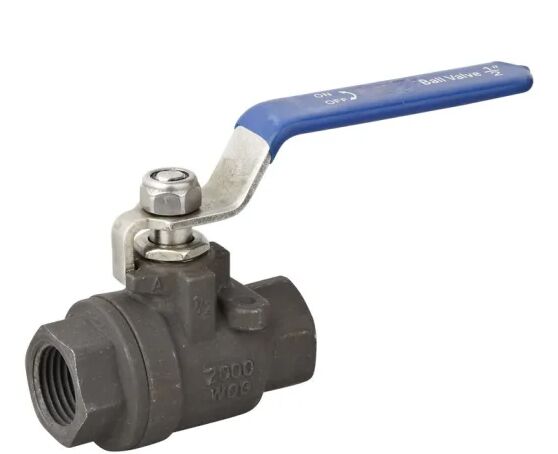
Carbon steel provides exceptional mechanical strength. It serves as the backbone for high-pressure applications. Ideal use cases include high-temperature steam lines, non-corrosive gas distribution, and heavy oil pipelines. It handles extreme physical stress and dynamic pressure fluctuations with ease. A properly specified carbon steel valve delivers decades of reliable service in the right environment. Common grades like WCB (cast) and A105 (forged) are industry staples for general utility and hydrocarbon processing.
However, carbon steel requires careful environmental management. You trade excellent mechanical strength for high susceptibility to corrosion. Without protective coatings, it rusts rapidly in moist environments. Internal corrosion occurs quickly if the media contains water or acidic compounds. It remains highly effective only when isolated from corrosive elements. Corrosion Under Insulation (CUI) is a massive problem for carbon steel lines. If moisture penetrates the exterior insulation, the pipe and valve body will rust away unseen until a catastrophic breach occurs.
To mitigate external corrosion, operators apply industrial epoxies or zinc-rich primers. But these coatings do nothing to protect the internal wetted surfaces. If your process fluid has any corrosive properties, or if water can drop out of the gas stream and pool in the valve body, carbon steel is the wrong choice. You must upgrade to an alloy with inherent corrosion resistance.
Austenitic stainless steel dominates the fluid control industry. The differences between common grades dictate their specific applications. Grade 304 (cast as CF8) contains chromium, providing baseline rust resistance. Grade 316 (cast as CF8M) adds molybdenum, significantly enhancing its resistance to pitting and chloride attacks. This addition makes 316 the default choice for most industrial applications where carbon steel falls short.
A standard stainless steel valve acts as the industry benchmark for chemical processing, food and beverage production, and moderately corrosive environments. It maintains fluid purity and resists degradation from harsh cleaning chemicals. The smooth surface finish also prevents bacterial growth in sanitary applications. We use stainless steel extensively in water treatment facilities where chlorine and other disinfectants would quickly destroy lesser metals.
Despite its versatility, stainless steel has limits. It is highly susceptible to Chloride Stress Corrosion Cracking (CSCC) at elevated temperatures. If you expose standard 304 or 316 stainless steel to hot, chloride-rich environments, the metal will develop microscopic cracks that propagate rapidly under pressure. In these specific scenarios, you must abandon standard stainless steel and move to higher-tier alloys.
Severe service environments destroy standard metals. High-performance exotic alloys fill this gap. Duplex stainless steel combines austenitic and ferritic microstructures for massive strength and chloride resistance. Monel excels in hydrofluoric acid. Hastelloy resists highly aggressive chemical mixtures. Inconel handles extreme heat, while Titanium offers unmatched strength-to-weight ratios in corrosive media. These materials require specialized foundries and precise machining techniques.
You deploy these materials when a standard corrosion resistant valve fails. Offshore saltwater platforms, highly acidic chemical processing plants, and mineral extraction facilities rely on exotic alloys. They prevent catastrophic breaches where fluid toxicity or environmental hazards present severe risks. For example, pumping hot seawater for cooling systems will pit 316 stainless steel in months. Upgrading to Super Duplex or a bronze alloy ensures the system survives the aggressive marine environment.
Working with exotic alloys requires strict attention to detail. You cannot mix and match components carelessly. If you install a Hastelloy valve but use standard stainless steel bolts, the bolts will corrode rapidly, leading to a flange leak. Every component in the assembly, including the bolting and the gaskets, must match the severity of the service.
Plastics and polymers offer absolute chemical inertness. PVC and CPVC valves handle water distribution and mild corrosives effectively. For ultra-high purity or extremely aggressive acids, engineers specify PTFE-lined metal valves. The fluoropolymer lining prevents the media from ever touching the metallic housing. This allows you to handle fluids like hydrochloric acid without needing solid exotic metal bodies, which saves significant weight and procurement time.
You must account for the mechanical limitations of plastics. They possess significantly lower pressure and temperature thresholds compared to metallic housings. They cannot withstand mechanical shock or pipe stress. If a forklift bumps a PVC pipe, it shatters. Lined metal valves bridge this gap, combining the structural strength of steel with the chemical inertness of PTFE. The steel outer body absorbs the mechanical loads and pipe stress, while the thick polymer lining handles the aggressive chemistry.
Lined valves do have a specific vulnerability: vacuum conditions. If the system pulls a vacuum, the negative pressure can suck the PTFE lining away from the metal housing, collapsing it inward and blocking the flow. If your process involves vacuum cycles, you must specify lined valves with specialized interlocking grooves that mechanically bond the polymer to the steel body.
System longevity depends on evaluating long-term operational efficiency. You must look beyond the initial installation effort. Calculate the projected maintenance frequency against the risks of unexpected downtime. A holistic evaluation framework accounts for the labor required to replace failing components and the production losses incurred during system outages. Buying the cheapest acceptable material often results in replacing that same component three times a year.
Investing in higher-grade industrial valve materials upfront dramatically extends service life. A system that degrades in months under harsh conditions can operate flawlessly for years with the right exotic alloy. Reducing maintenance cycles and eliminating unplanned outages directly improves the overall operational efficiency of the facility. When you factor in the cost of scaffolding, crane rentals, and specialized labor required to swap out a large valve, the upfront premium for a better alloy becomes negligible.
You also have to consider the safety implications of material degradation. A failing valve does not just stop production; it can release hazardous chemicals or high-pressure steam into the work environment. Specifying materials that offer predictable, slow degradation rather than sudden catastrophic failure gives your maintenance team the window they need to perform safe, scheduled replacements.
Raw material specifications only tell half the story. The execution of the manufacturing process determines actual field performance. Casting quality dictates the structural integrity of the housing. Porosity or inclusions in the metal lead to pressure boundary failures. Machining tolerances determine how well the internal seals perform under pressure. A poorly machined Hastelloy valve will leak just as badly as a poorly machined carbon steel one.
You must partner with a reputable valve manufacturer who maintains rigorous quality assurance processes. Reliable vendors provide deep engineering support. They review your specific fluid data and offer application-specific material recommendations. Their expertise ensures the theoretical material properties translate into reliable physical performance on the plant floor. They conduct non-destructive testing (NDT) like radiography or dye penetrant inspections to guarantee the castings are free of hidden defects.
A strong manufacturer also manages the supply chain effectively. Exotic alloys often have massive lead times. A vendor with a robust inventory of raw castings can machine and assemble the required components much faster than a broker who has to source everything from scratch. This capability is critical when you are facing an emergency shutdown and need a replacement immediately.
Connecting dissimilar metals creates a severe implementation risk. When two different metals interact within a conductive fluid environment, an electrochemical reaction occurs. The less noble metal acts as an anode and corrodes rapidly. This galvanic corrosion destroys pipe threads, flanges, and valve housings in a matter of weeks. We see this frequently when contractors thread brass valves directly into galvanized steel piping in water systems.
Engineers mitigate this risk through careful system design. You can utilize dielectric unions to physically separate the dissimilar metals, breaking the electrical circuit. Alternatively, match the anodic and cathodic indexes of the connected materials. The safest strategy involves standardizing pipe and valve materials across the entire fluid system. If you must mix metals, ensure the anode (the less noble metal) has a massive surface area compared to the cathode to slow down the corrosion rate.
Identify the nobility of both metals using a standard galvanic series chart.
Determine the conductivity of the process fluid (saltwater is highly conductive; pure water is not).
Install dielectric isolation kits (gaskets, sleeves, and washers) on flanged connections to break the electrical path.
Apply internal coatings to the cathodic metal to reduce the exposed surface area driving the reaction.
Substandard or counterfeit metals frequently enter the global supply chain. Installing a valve cast from unverified scrap metal invites catastrophic failure. Counterfeit materials lack the necessary alloying elements to resist corrosion or contain pressure. They look identical to high-grade alloys but fail unpredictably under operational stress. A fake 316 stainless steel valve might actually be 304, lacking the molybdenum needed to survive your chemical process.
You must mandate strict material traceability. Require Material Test Reports (MTRs) for every critical component. These documents verify the exact chemical composition and physical properties of the heat lot. Ensure strict adherence to ASME, ASTM, and API standards during procurement. Verifiable documentation is your only defense against counterfeit materials. Do not accept generic certificates of compliance; demand the actual mill test data.
Request EN 10204 3.1 certified MTRs before accepting delivery of any metallic pressure-retaining component.
Cross-reference the heat numbers stamped physically on the valve body with the numbers listed on the MTR.
Verify the chemical breakdown on the MTR meets the specific ASTM standard for that alloy grade.
Check the mechanical properties (tensile strength, yield strength, elongation) to ensure they meet the minimum design requirements.
There is no universal best material for fluid control systems. Optimal selection remains a strict calculation of media, environment, pressure, temperature, and system design. You must align the metallurgy with the physical realities of the application to ensure long-term reliability and safety. Engineers and procurement teams should categorize their applications by severity. Classify systems as general, corrosive, or severe service. Utilize the STAMPED method to immediately narrow down the viable material families. This logical shortlisting prevents critical specification errors.
Audit your current failure rates to identify recurring material incompatibilities in your fluid systems.
Consult with a metallurgical specialist to analyze complex or highly aggressive fluid profiles.
Request detailed material compatibility charts from your certified manufacturer for your specific media.
Mandate EN 10204 3.1 Material Test Reports for all new valve procurements to guarantee alloy authenticity.
A: The STAMPED method is an industry-standard checklist used to specify valves. The acronym stands for Size, Temperature, Application, Media, Pressure, Ends, and Delivery. It ensures engineers account for all operational variables and physical requirements before selecting a material, preventing premature failures caused by overlooked system parameters.
A: Carbon steel and stainless steel are the most common materials. Carbon steel provides immense physical strength for high-pressure, non-corrosive environments like steam and oil. Stainless steel offers excellent baseline corrosion resistance, making it the standard choice for chemical processing, water treatment, and food production.
A: Choose carbon steel for high-pressure, high-temperature applications where the media is non-corrosive, such as dry gas or steam. Select stainless steel when the fluid contains moisture, acids, or chlorides. Stainless steel provides essential corrosion resistance that carbon steel lacks, preventing rust and internal degradation.
A: A corrosion resistant valve utilizes specific alloying elements or protective linings to survive harsh chemicals. Materials like 316 stainless steel contain molybdenum to resist pitting. Exotic alloys like Hastelloy handle severe acids. Alternatively, specialized fluoropolymer (PTFE) linings physically isolate the metal housing from the aggressive media.
A: High temperatures lower the pressure ratings of metals and quickly degrade soft elastomer seals. Extreme heat can cause structural yielding. Conversely, low cryogenic temperatures cause standard metals like carbon steel to become brittle and shatter. You must select specific impact-tested alloys or high-temperature metals based on thermal extremes.
A: Material traceability, proven through Material Test Reports (MTRs), verifies the exact chemical composition of the metal. It ensures regulatory compliance and confirms the alloy meets required strength and corrosion standards. Traceability prevents catastrophic system failures caused by substandard or counterfeit materials entering the supply chain.
A: Standard 316 stainless steel offers limited resistance and will eventually suffer from pitting and crevice corrosion in severe marine environments. For prolonged saltwater exposure, engineers typically specify Duplex stainless steel, Monel, or specialized bronze alloys. These materials possess higher resistance to aggressive chloride attacks.


