
Views: 0 Author: Site Editor Publish Time: 2026-08-11 Origin: Site


Valve failure in harsh industrial environments carries heavy operational penalties. When standard isolation components degrade under chemical attack, facilities face unplanned downtime, environmental fines, and immediate safety hazards. Specifying valves for corrosive media requires navigating complex variables. Standard materials like brass or carbon steel deteriorate rapidly under high pressure, extreme temperatures, or aggressive chemical exposure. Solving this challenge requires a rigorous evaluation of metallurgical properties, seat materials, and structural design specifications. Selecting a reliable stainless steel ball valve guarantees long-term operational integrity. You must engineer the component specifically for the media it will control. By matching the correct alloy grade and internal seal composition to the process conditions, we eliminate frequent replacement cycles. This maintains secure fluid isolation in the most demanding applications.
Material Grade Dictates Lifespan: The choice between 304, 316, and specialty stainless alloys must be mapped directly to the specific chemical composition and chloride concentration of the media.
Seats and Seals Matter as Much as the Body: A corrosion-resistant body is useless if the internal soft parts (PTFE, PEEK) degrade under the application's temperature or chemical profile.
Supplier Traceability is Non-Negotiable: Procuring from a reputable ball valve supplier that provides Material Test Reports (MTRs) is critical for compliance and risk mitigation.
Establishing the correct application boundary is the first step in valve specification. Brass offers reliable performance for standard water distribution or residential plumbing. It fundamentally lacks the thermal tolerance and chemical resistance required for industrial processing. When exposed to acids, chlorides, or high-moisture environments, standard brass undergoes dezincification. This metallurgical phenomenon leaches zinc from the alloy. It leaves behind a porous, structurally compromised copper shell that will eventually rupture under line pressure. I have seen brass valves snap at the threads during routine maintenance simply because the zinc was entirely depleted by mildly acidic cooling water.
Carbon steel faces a different but equally destructive vulnerability: oxidation. In environments with high humidity, frequent washdowns, or corrosive atmospheric conditions, carbon steel rapidly forms iron oxide. This rust scales off and contaminates the process media. It also causes internal components to seize. The operational consequences of using these inadequate materials include structural weakening, internal scaling, compromised pressure ratings at elevated temperatures, and the inevitable development of hazardous leak paths. You cannot rely on painted carbon steel in a chemical plant; the moment the coating scratches, aggressive atmospheric corrosion begins.
Stainless steel actively resists degradation through a chemical process known as passivation. The alloy contains a minimum of 10.5% chromium. This chromium reacts with oxygen in the environment to form a microscopic, self-healing chromium oxide layer on the metal's surface. If the surface is scratched or machined, this passive layer instantly reforms. It protects the underlying iron from oxidation and chemical attack. This makes a properly specified corrosion resistant ball valve highly effective in aggressive media.
Beyond metallurgy, the mechanical architecture of the valve plays a major role in longevity. A ball valve utilizes a simplified, quarter-turn rotational design. It has significantly fewer internal components than complex multi-part globe or gate valves. This streamlined construction inherently reduces the number of corrosion-prone failure points. The straight-through flow path and internal geometry minimize the surface area exposed to stagnant corrosive media. Gate valves often trap fluid in the bonnet cavity, leading to localized pitting. Ball valves sweep the media through the bore, preventing the buildup of corrosive deposits.
Grade 304 stainless steel serves as the foundational material for general industrial applications. Its chemical composition typically includes 18% chromium and 8% nickel. This provides excellent baseline resistance to oxidation and mild chemical exposure. The high chromium content ensures a robust passive layer. The nickel enhances structural ductility and weldability.
Engineers typically specify 304 stainless steel for mild corrosives, treated water systems, compressed air lines, and environments with low chloride exposure. It performs exceptionally well in food and beverage processing, brewing, and light manufacturing. These are areas where the media does not contain aggressive acids or high concentrations of salts. However, 304 is highly susceptible to pitting when exposed to continuous high-chloride environments. Using 304 in a coastal facility or a brine line will result in rapid failure.
For more aggressive applications, 316 stainless steel is the mandatory upgrade. The critical differentiator in 316 is the addition of 2% to 3% molybdenum. This specific element drastically increases the alloy's resistance to pitting and crevice corrosion. It performs exceptionally well in chloride-rich environments that would rapidly destroy 304 stainless steel. The "L" variant (316L) contains lower carbon levels. This prevents carbide precipitation during welding and maintains corrosion resistance at the weld seams.
Because of these enhanced properties, 316 is the baseline standard for any chemical processing valve. It is universally required for marine applications, offshore platforms, pharmaceutical manufacturing, and facilities handling harsh solvents. The molybdenum content ensures the passive layer remains intact even under localized chemical stress. When we pipe up a new chemical injection skid, 316L is the absolute minimum grade we specify for the isolation points.
Certain industrial processes exceed the capabilities of standard 300-series stainless steels. When facilities handle highly concentrated sulfuric acids, hydrochloric acids, or operate in extreme high-temperature chloride environments, we must escalate to advanced metallurgical solutions. Duplex stainless steels, such as Alloy 2205, offer a mixed austenitic-ferritic microstructure. This provides double the yield strength of 316 and superior resistance to chloride stress corrosion cracking.
For the most severe localized corrosion risks, super austenitic alloys like AL-6XN or 254 SMO are required. These materials feature exceptionally high levels of molybdenum and nitrogen. They offer near-immunity to pitting in aggressive chemical slurries. Specifying these specialty alloys is necessary when the risk of catastrophic failure outweighs the complexity of sourcing advanced materials.
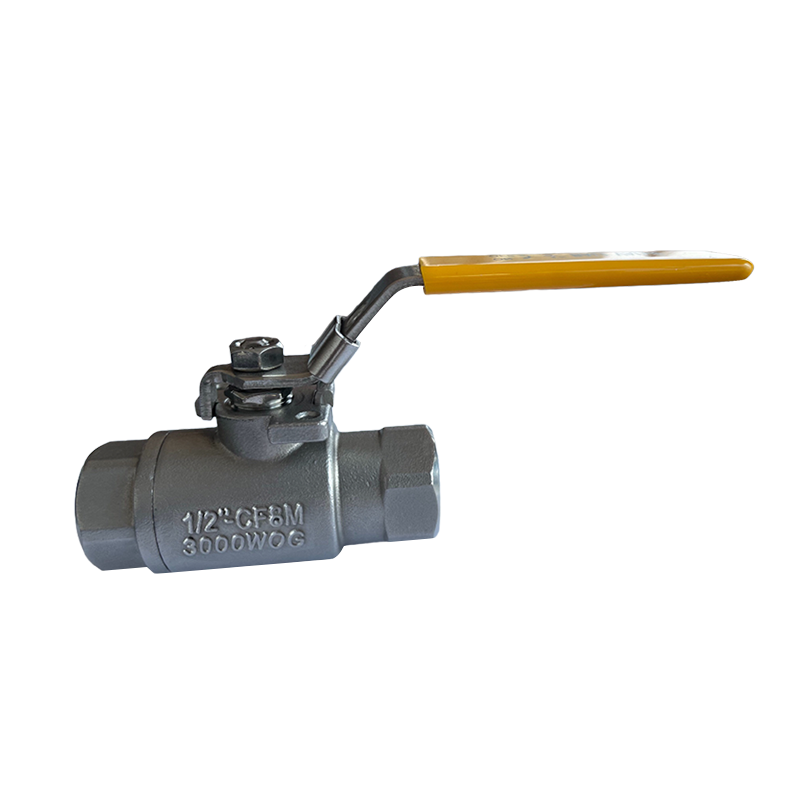
Understanding pressure ratings is critical for safe valve deployment. Industrial valves are typically marked with WOG (Water, Oil, Gas) or CWP (Cold Working Pressure) ratings. These acronyms indicate the maximum allowable pressure the valve can withstand at ambient temperatures. This is usually between -20°F and 100°F. A 1000 WOG rating means the valve can safely handle 1000 PSI of non-shock pressure at room temperature.
As process temperatures increase, the pressure-handling capability of the valve decreases significantly. A true high pressure ball valve requires specific structural enhancements to maintain integrity under extreme stress. These requirements include thicker wall dimensions to prevent body deformation, heavy-duty bolting for multi-piece designs, and blowout-proof stem configurations. A blowout-proof stem is machined with an integral collar that seats internally against the valve body. This ensures the stem cannot be ejected by high internal line pressure, protecting operators from dangerous blowouts.
When specifying valves for larger pipe diameters or extreme pressures, the internal ball support mechanism becomes a critical factor. Standard ball valves utilize a floating design. In a floating ball valve, the ball is not fixed to a bottom stem. Line pressure pushes the ball downstream, forcing it against the downstream seat to create a seal. This design is highly effective and economical for smaller sizes and moderate pressures.
In high-pressure lines or large-diameter piping, the force exerted on a floating ball becomes immense. This excessive force causes rapid seat wear and makes the valve extremely difficult to turn. For these severe applications, we specify trunnion mounted ball valves. A trunnion valve features a mechanical anchoring system at the top and bottom of the ball. This absorbs the line pressure, preventing the ball from shifting. Instead of the ball moving into the seat, spring-loaded seats are pushed against the stationary ball. This drastically reduces operating torque and extends seat life in high-pressure chemical lines.
The metallic body provides structural integrity, but the internal seats and seals dictate the valve's operational limits. The most common seat material is standard PTFE (Polytetrafluoroethylene). PTFE offers exceptional broad-spectrum chemical resistance and a low coefficient of friction. This makes it ideal for general chemical applications at moderate temperatures up to roughly 400°F.
When process conditions exceed the limits of virgin PTFE, we select advanced polymers or metallic alternatives. Reinforced PTFE (RTFE) blends PTFE with glass or carbon fibers. This increases wear resistance and raises the temperature threshold. For higher temperatures up to 500°F or radioactive environments, PEEK (Polyether ether ketone) provides superior mechanical strength. In applications involving abrasive slurries, suspended solids, or extreme heat exceeding 700°F, metal-to-metal seats coated with stellite or tungsten carbide are mandatory. Any polymer seat would be instantly shredded or melted in these conditions.
Seat Material | Temperature Limit | Chemical Resistance | Ideal Application |
|---|---|---|---|
Virgin PTFE | Up to 400°F (204°C) | Excellent (Broad Spectrum) | General chemicals, water, food processing |
Reinforced PTFE (RTFE) | Up to 450°F (232°C) | Excellent | Higher pressure steam, moderate abrasives |
PEEK | Up to 500°F (260°C) | Very Good | High-temperature processing, high-cycle applications |
Metal-to-Metal | 700°F+ (371°C+) | Depends on Base Alloy | Abrasive slurries, extreme heat, severe service |
Flow dynamics heavily influence valve selection. A full port ball valve features an internal ball diameter that matches the inner diameter of the connecting pipeline. This design eliminates flow restriction. It prevents pressure drops across the valve and mitigates the risk of cavitation. Full port designs are essential for systems requiring maximum flow rates. They are also required for lines that need regular pigging for cleaning. The trade-off is a larger physical footprint and heavier overall weight.
Standard port valves have an internal bore that is typically one pipe size smaller than the connecting line. This creates a slight restriction in flow and a corresponding pressure drop. Standard port valves are perfectly acceptable for non-critical flow rates, compressed air systems, or space-constrained piping layouts. In these scenarios, the slight reduction in fluid velocity does not negatively impact the process.
The method used to integrate the valve into the piping system determines the risk of external leaks. Threaded connections (NPT) are common in smaller valve sizes. They offer distinct maintenance advantages in non-toxic, lower-pressure corrosive lines. Technicians can rapidly unthread and replace the valve without specialized welding equipment.
Threaded connections inherently introduce potential leak paths through the thread roots. In highly toxic, flammable, or high-pressure chemical lines, flanged or welded connections are strictly required. Flanged ends allow for secure, bolted mating with gaskets that provide a robust seal against hazardous media. Socket-weld or butt-weld connections permanently fuse the valve to the pipe. This entirely eliminates mechanical leak paths and provides the highest level of environmental safety in critical infrastructure.
Modern process facilities rely heavily on automated flow control. Selecting manual valves with an integrated ISO 5211 mounting pad allows for seamless future upgrades. This standardized pad provides a direct bolting interface for pneumatic or electric actuators. It eliminates the need for custom-machined mounting brackets. Direct-mount designs reduce the overall height of the automated valve assembly and eliminate hysteresis caused by sloppy bracket connections.
When automating a valve, understanding the stem torque is critical. Breakaway torque is the rotational force required to unseat the ball from the closed position. This value spikes when the valve sits closed for extended periods in sticky or abrasive media. We always apply a safety factor of at least 20% to 30% above the manufacturer's published breakaway torque when sizing an actuator. Undersized actuators will stall, leaving the valve partially open and vulnerable to seat damage.
Installing threaded stainless steel components introduces a significant mechanical risk known as thread galling. Galling is a form of severe adhesive wear. It occurs when two stainless steel surfaces rub together under high pressure. The friction strips away the protective chromium oxide layer, causing the raw metals to fuse or cold weld together. Once galled, the threads seize completely. You often have to cut the valve out of the piping system.
Preventing galling requires strict adherence to proper installation protocols. We use a specific sequence to ensure leak-free, gall-free connections:
Clean both the male and female threads thoroughly with a wire brush to remove any machining debris.
Apply three wraps of high-density PTFE thread seal tape to the male threads, wrapping in the direction of the thread spiral.
Apply a thin layer of nickel-based anti-seize compound over the PTFE tape.
Engage the threads by hand for the first few turns to ensure proper alignment.
Use smooth, continuous wrench movements to achieve final torque. Never use high-speed impact wrenches on stainless steel threads.
Ball valves are designed primarily for on/off isolation, not for flow regulation. Operating a standard ball valve in a partially open position in high-velocity liquid lines leads to severe hydrodynamic issues. When fluid is forced through the restricted opening of a partially closed ball, its velocity spikes. Its pressure drops below the liquid's vapor pressure, causing vapor bubbles to form.
As the fluid moves past the restriction and pressure recovers, these vapor bubbles collapse violently. This collapse generates microscopic shockwaves and micro-jets that blast the internal surfaces of the valve. Over time, cavitation will pit and erode the stainless steel body. It will completely destroy the soft polymer seats, leading to catastrophic internal leakage. If throttling is required, we specify V-port ball valves or globe valves engineered specifically for flow control.
Even the highest quality stainless steel valves require structured maintenance to ensure long-term reliability. We implement a strict preventative maintenance schedule for all critical isolation points. Technicians conduct visual inspections monthly to check for external signs of weeping at the stem packing or body joints.
For automated valves, we stroke the valve fully open and closed every quarter. This prevents the ball from seizing in the seats due to media buildup. If a valve develops a minor stem leak, technicians can often resolve it by tightening the packing gland nut by a quarter turn. However, if the leak persists, the valve must be isolated, depressurized, and rebuilt with a new packing set. We always keep OEM rebuild kits in inventory to minimize downtime during these maintenance events.
The global supply chain is saturated with counterfeit or low-grade stainless steel components. Installing a valve cast from substandard scrap metal into a highly corrosive process line guarantees premature failure. Ensuring metallurgical integrity requires rigorous vetting of the manufacturer and distributor.
A reputable ball valve supplier must operate under ISO 9001 quality management systems. They must provide complete Material Test Reports (MTRs), specifically EN 10204 3.1 certificates, for every valve. These documents trace the exact chemical composition, heat number, and physical properties of the steel back to the original foundry. The supplier should demonstrate compliance with international testing standards, such as API 598 or ASME B16.34. This proves that every unit has been hydrostatically and pneumatically tested for shell strength and seat leakage before shipment.
Audit your current piping systems to identify zones with high valve failure rates or visible external corrosion.
Compile exact process data for these problem areas, including maximum operating pressures, peak temperatures, and precise chemical concentrations.
Standardize installation procedures across your maintenance teams to mandate the use of anti-seize compounds on all threaded stainless connections.
Consult with a certified supplier to obtain technical sizing recommendations and demand MTR-backed quotes for all future valve procurements.
A: Brass is highly suitable for standard residential plumbing and non-corrosive water applications. However, stainless steel becomes strictly required for industrial environments involving harsh chemicals, high chloride exposure, extreme temperatures, or high-pressure systems where brass would suffer from dezincification or structural failure.
A: The primary difference is the chemical composition. Grade 316 contains 2% to 3% molybdenum, which is absent in 304. This addition provides 316 with superior resistance to chlorides, pitting, and crevice corrosion, making it the standard for marine and chemical processing applications.
A: Yes, provided it is engineered for those conditions. High-pressure applications require valves specified with the correct wall thickness, heavy-duty bolting, blowout-proof stems, and appropriate WOG or CWP ratings that exceed the maximum system pressure.
A: Ball valves offer rapid quarter-turn operation, tighter shutoff capabilities, and feature fewer moving parts that are prone to corrosion. Additionally, their internal geometry has fewer cavities where corrosive media can stagnate and cause localized pitting compared to gate valves.
A: Thread galling is prevented by applying high-quality nickel-based anti-seize compounds or heavy-density PTFE tape to the threads before installation. Technicians must also avoid over-torquing and refrain from using high-speed impact tools during assembly.
A: Virgin PTFE is the standard for general chemicals up to 400°F. For higher temperatures up to 500°F, PEEK is utilized. For extreme heat exceeding 700°F or highly abrasive media, specialized metal-to-metal seats are required.
A: You verify quality by requesting Material Test Reports (MTRs), specifically EN 10204 3.1 certificates, from the supplier. These documents verify the exact chemical composition, heat number, and physical properties of the steel directly from the foundry.


