
Views: 0 Author: Site Editor Publish Time: 2026-08-04 Origin: Site


Handling heavy-solids and abrasive fluids destroys standard piping infrastructure. Unplanned downtime from valve failure halts production and forces emergency maintenance. When you pump viscous, corrosive, and abrasive media like mine tailings, sludge, or dense mud, standard valves jam. They suffer from rapid seat wear, cavity blockages, and fail to isolate flow completely. You need a mechanical solution built specifically for these harsh conditions. The industry-standard answer is the knife gate valve for slurry. It provides reliable low-pressure, high-solids isolation and flow diversion. We will evaluate its mechanics, physical limitations, and selection criteria so you can specify the right equipment for your pipeline.
Operational Mechanism: The sharpened, beveled gate physically slices through dense media, ensuring reliable shutoff where standard valves jam.
Flow Efficiency: Full-port, smooth-cavity designs minimize turbulence, pressure drop, and the accumulation of abrasive solids.
Application Limits: Optimal for cost-effective, low-pressure on/off isolation and pipeline routing/diverting; inherently unsuited for high-pressure throttling or precision flow control.
Lifecycle Dependency: Long-term performance relies heavily on matching seat and blade materials (e.g., polyurethane, hardened alloys) to the specific abrasion profile of the slurry.
Slurry pipeline management requires specialized equipment due to the destructive physical properties of the media. Slurries vary wildly in their composition, specific gravity, and behavior. Settling slurries contain large, coarse particles like crushed rock or heavy ores. These particles drop out of suspension immediately if the flow velocity decreases below a critical threshold. Non-settling slurries act more like a thick, homogeneous fluid, often containing fine clays or biological waste. You also encounter mud, coal powder, and dense material-water mixtures that behave unpredictably under pressure. Each type severely impacts pipeline infrastructure. Large particle sizes cause physical impact damage and gouging. High density increases the required pumping force and internal pressure. High flow velocities accelerate sliding abrasive wear on all internal wetted surfaces.
Standard valves fail rapidly under these harsh conditions. Traditional wedge gate valves feature a bottom cavity where the gate seats to create a seal. In slurry applications, solids pack tightly into this bottom cavity. The valve simply cannot close fully, and forcing it bends the stem or destroys the actuator. Globe valves force the fluid through a tortuous, S-shaped path. This creates massive pressure drops and localized high-velocity zones. The abrasive slurry acts like a waterjet cutter, destroying the globe valve body in a matter of weeks. Butterfly valves place a disc directly in the center of the flow path. Fibrous materials wrap around the disc, and abrasive particles quickly erode the soft elastomer sealing edges. Clogged bonnets, washed-out seats, and jammed mechanical components are the inevitable results of installing the wrong valve type.
To successfully isolate and divert slurry, a valve must meet specific performance baselines. You need zero-leakage isolation to ensure safe maintenance on downstream equipment like pumps and hydrocyclones. The valve must provide reliable flow diversion between pipeline branches without jamming mid-stroke. Self-cleaning capabilities are mandatory to prevent material buildup during actuation. Finally, the internal components must offer extreme resistance to localized erosion. Meeting these criteria requires a fundamental shift away from standard valve architecture.
Valve Type | Failure Mechanism in Slurry | Typical Lifespan in Severe Service |
|---|---|---|
Wedge Gate Valve | Solids pack into the bottom seating cavity; fails to close. | Days to Weeks |
Globe Valve | Tortuous flow path causes rapid localized erosion and body washout. | Weeks |
Butterfly Valve | Disc obstructs flow; fibers tangle; abrasive media destroys the seat. | Weeks to Months |
Standard Ball Valve | Particulates trap between the ball and seat, scoring the ball and shredding the seal. | Months |
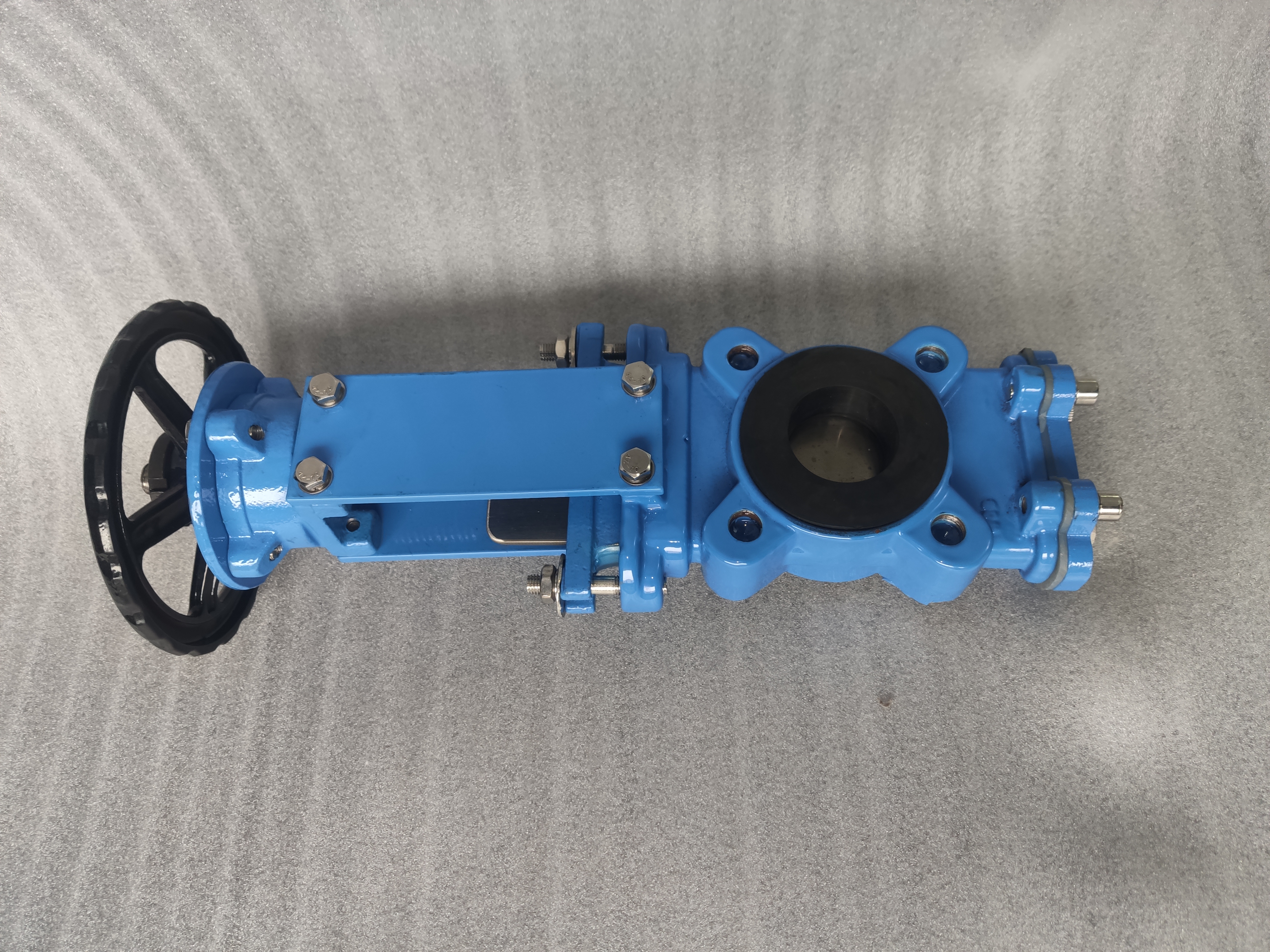
The core advantage of this valve lies in its beveled gate design. Unlike a blunt wedge gate, the knife edge physically cuts through the medium. When actuated, the sharpened blade shears through pulp, dry ash, and heavy solids. It pushes the material out of the way to achieve a tight seal against the elastomer. This mechanical cutting action prevents the blockages that plague standard valves. The gate slices downward, separating the solids from the sealing area and ensuring a positive shutoff even in lines packed with settled solids.
A full port and smooth cavity architecture further enhances performance. The internal diameter of the valve matches the pipeline perfectly. This creates an unobstructed flow path. By eliminating internal cavities, the design prevents material from packing inside the valve body. A smooth flow path minimizes turbulence. Less turbulence means less localized wear and a drastic reduction in fiber buildup. The fluid moves through the valve exactly as it moves through a straight section of pipe, maintaining velocity and keeping solids in suspension.
Engineers must choose between push-through sleeves and traditional guided gates. Traditional guided shear gates use internal metal tracks to keep the blade aligned. However, fine particulates can still enter these guides, causing the gate to bind. Push-through elastomer sleeve designs offer a superior alternative for severe applications. Two heavy-duty rubber sleeves meet in the center of the valve. As the gate pushes down, it separates the sleeves. Any trapped particulates are expelled from the bottom of the valve through a discharge area during actuation. This self-cleaning action keeps the sealing area completely clear of debris.
Structural weight plays a significant role in pipeline design and support engineering. A slurry knife gate valve features a notably lightweight structural footprint and a narrow face-to-face dimension. Alternative heavy-duty valves require massive cast bodies to contain high pressures. The slim profile of the knife gate design provides distinct installation advantages. You can easily fit them into tight spaces, complex piping arrays, and existing manifolds. They require less structural steel support and reduce the overall physical load on the pipeline infrastructure.
Selecting the right isolation valve requires evaluating the mechanical trade-offs between different designs. Ball valves and knife gate valves serve entirely different operational envelopes. Pressure ratings represent the first major dividing line. Trunnion-mounted ball valves handle extreme high-pressure environments easily. They maintain tight seals under hundreds or thousands of PSI. Knife gate valves operate strictly within low-to-medium pressure limitations. They typically max out around 150 PSI (PN10) for standard sizes. You deploy them where managing heavy solids is more critical than containing high pressure.
Abrasive handling separates the two designs completely. Ball valves rely on a smooth, polished sphere rotating against soft seats. When abrasive slurry enters a ball valve, particulates get trapped between the ball and the seat. The 90-degree rotation scores the ball and shreds the seat material. The valve loses its seal almost immediately, allowing media to bypass. A knife gate design operates differently. The linear motion of the blade pushes particulates out of the sealing area. The self-cleaning action prevents the scoring and seat damage that destroys ball valves in slurry service.
Maintenance accessibility and replacement logistics heavily favor the knife gate design for large-diameter lines. Large-diameter ball valves require massive amounts of raw material and precision machining. They weigh thousands of pounds. Maintaining them requires heavy cranes, extensive rigging, and removing the entire unit from the line, resulting in days of downtime. Knife gate valves offer a highly accessible choice for large-diameter tailings and discharge lines. You can often repack the gland, replace the wear rings, or swap the elastomer sleeves while the main valve body remains bolted in the pipeline, reducing downtime to hours instead of days.
Choosing the correct anti-abrasive knife gate valve requires a strict evaluation of internal components and pipeline conditions. Sealing mechanisms dictate how the valve handles pressure direction. Uni-directional valves seal against pressure from one specific side. If flow reverses, the seal will leak and the gate may bend away from the seat. Bi-directional valves seal effectively regardless of flow direction. You must evaluate your pipeline for backpressure, pump trip scenarios, and flow reversal risks before selecting the sealing type.
Material selection for wetted parts determines the lifespan of the valve. Natural rubber offers excellent resistance to fine, sliding abrasion and round particles. EPDM provides strong chemical resistance for corrosive slurries and higher temperature limits. Polyurethane outlasts rubber in applications involving heavy, coarse, and sharp particulates like crushed quartz. For the gate itself, standard 316 stainless steel works for mild slurries. However, severe applications require hardened steel alloys, duplex stainless, or specialized coatings like tungsten carbide to prevent the blade from eroding away.
Elastomer Material | Max Temperature | Abrasion Resistance | Best Application |
|---|---|---|---|
Natural Rubber | 160°F (71°C) | Excellent (Sliding) | Fine tailings, round particles, mild slurries. |
EPDM | 250°F (121°C) | Good | Corrosive slurries, wastewater, high temps. |
Polyurethane | 180°F (82°C) | Outstanding (Impact) | Sharp rocks, heavy ores, severe mining slurry. |
Viton (FKM) | 400°F (204°C) | Moderate | Highly chemical slurries, extreme temperatures. |
Actuation and automation choices depend entirely on your facility layout and operational needs. Manual handwheels or bevel gear operators work well for small valves or infrequent actuation. Pneumatic cylinders provide fast, reliable operation for automated sequences and require standard plant air. Hydraulic actuators deliver the massive thrust required to push large gates through highly dense settling slurries or scale-buildup. Electric motor actuators integrate seamlessly into modern facility automation standards. You must select the actuator based on valve size, operating torque, available utilities, and the need for remote operation.
Replaceable internal components protect the main valve body from destruction. Deflection cones sit upstream of the gate on the inlet flange. They redirect high-velocity abrasive flow away from the valve walls and sealing areas, focusing the media into the center of the pipe. Wear rings serve a similar purpose. Instead of the abrasive slurry eroding the expensive cast valve body, it wears down the inexpensive, replaceable ring. During scheduled maintenance, you simply unbolt the valve, swap out the wear ring, and put it back in service, extending the life of the primary asset indefinitely.
Different industries impose unique demands on fluid handling equipment. A mining slurry valve faces the most extreme conditions on earth. Mineral processing, copper tailings discharge, and coal slurry transport involve heavy solids and severe abrasion. The valves must withstand constant bombardment by sharp rock particles traveling at high velocities. They require heavy-duty polyurethane sleeves, hardened gates, and robust hydraulic actuators. Failure in a mining pipeline leads to massive environmental spills and costly production halts. The equipment must prioritize rugged durability and field serviceability above all else.
Municipal and industrial waste facilities face a different set of challenges. A wastewater treatment valve handles corrosive primary sludge, grit, and biological waste. Chemical compatibility becomes the primary concern. The elastomers must resist degradation from treatment chemicals, chlorine, and hydrogen sulfide gas. Leak-free environmental compliance is strictly enforced by regulatory bodies. The valve must provide a bi-directional, bubble-tight seal to prevent raw sewage from bypassing isolation points during critical maintenance on pumps or anaerobic digesters.
The pulp, paper, and bulk handling sectors require valves that prevent material jamming. High-consistency paper stock contains long wood fibers that easily tangle around internal valve components. Dry ash, coal powder, and mineral powders act like solid cement if moisture enters the line. The knife gate design slices cleanly through paper stock without causing fiber buildup or dewatering the stock. For dry bulk handling, specialized purge ports keep the seating area clear of powder, ensuring the gate seats fully every single time without packing the chest.
Even the best equipment requires proper installation and maintenance. Packing leakage represents the most common failure point in any gate valve. The gland packing seals the area where the gate exits the valve body at the top. As the gate moves up and down, it drags abrasive particles through the packing, causing wear and eventual leakage. You can mitigate this risk by utilizing live-loaded packing systems. These systems use Belleville spring washers on the gland nuts to maintain constant, even pressure on the packing material as it wears. Routine adjustment schedules remain necessary to ensure a tight seal over time.
Installation orientation heavily impacts performance and lifespan. Engineers strongly recommend installing these valves in vertical pipelines. If you must install them in horizontal pipelines, the actuator must point straight up at the 12 o'clock position. Installing them in non-vertical orientations creates severe risks. If you mount the valve sideways (at 3 or 9 o'clock) in a horizontal pipe, gravity pulls the heavy solids down into the chest area of the valve. The solids settle, dewater, and pack tightly. When you attempt to actuate the valve, the gate jams against the solid mass, potentially bending the blade, snapping the stem, or burning out the electric actuator.
Infrequent actuation allows media to solidify inside the valve body. Flush ports and purge systems solve this problem. These integrated ports allow you to inject high-pressure water or air directly into the valve chest. You flush out accumulated media before actuating the gate. This prevents gate binding and protects the packing from being shredded by dried, hardened slurry. Integrating purge sequences into your standard operating procedures dramatically extends the maintenance interval. You should pipe the flush water at 10 to 20 PSI above the maximum line pressure to ensure effective clearing.
Using standard on/off valves for flow modulation guarantees rapid failure. Throttling damage occurs when you leave the gate partially open to control flow rate. The fluid accelerates through the restricted opening. This localized high-velocity flow acts like a waterjet cutter. It quickly destroys the elastomer seat and erodes the bottom edge of the metal gate. If your process requires flow modulation, you must specify specialized V-port designs. Standard models are strictly for fully open or fully closed isolation.
Procuring reliable equipment requires vetting the supplier thoroughly. A competent knife gate valve manufacturer must demonstrate strong engineering and customization capabilities. Off-the-shelf products rarely solve complex slurry problems. You need a partner who can modify designs to fit your exact parameters. Look for the ability to provide custom face-to-face dimensions to replace legacy equipment without modifying your pipe spools. They should offer specialized coatings like tungsten carbide or hard chrome plating for extreme wear resistance. The ability to integrate custom purge ports, flush systems, and lockout-tagout (LOTO) features indicates a high level of engineering competence.
Quality assurance separates premium manufacturers from low-tier suppliers. You must demand documented proof of performance. Look for adherence to recognized certifications such as API 598, ASME B16.34, and MSS SP-81 standards. Request documented hydrostatic shell testing to verify the structural integrity of the cast valve body. Demand seat leakage testing reports to confirm the valve meets the required isolation standards before it leaves the factory. Visual inspections are not enough; you need hard metallurgical data and test reports.
Supply chain reliability dictates your facility's uptime. Even the most robust valves eventually require wear parts. You must evaluate the manufacturer's aftermarket support and inventory management. Determine their lead times for critical spare parts like replacement elastomer sleeves, packing sets, wear rings, and hardened gates. A manufacturer with a robust local inventory minimizes your downtime during scheduled maintenance turnarounds. If you cannot source replacement parts quickly, a minor seat repair turns into a major production loss.
To eliminate unplanned downtime and optimize your slurry pipeline infrastructure, execute the following steps immediately:
Audit your current piping isometric drawings to identify isolation points experiencing seat failure or leakage every six months.
Measure the exact particulate size, solids concentration by weight, and flow velocity of your media before specifying new equipment.
Specify push-through elastomer sleeves for any line handling jagged, heavy solids that settle quickly.
Install flush water connections on the valve chest for any unit actuated less than once per week.
A: Standard models handle low-to-medium pressure applications, typically maxing out at 150 PSI (PN10). Custom high-pressure variants exist for specific industrial needs, but they remain less common. For pressures significantly exceeding 150 PSI, you generally need alternative heavy-duty isolation methods.
A: Standard models cannot be used for throttling. Leaving the gate partially open creates high-velocity flow that rapidly erodes the seat and the gate edge. If you need to modulate flow, you must use specialized V-port knife gates designed specifically for throttling abrasive media.
A: You prevent packing by selecting zero-cavity or push-through seat designs that expel particulates during actuation. Additionally, integrating purge ports allows you to flush the valve chest with high-pressure water or air, clearing out accumulated solids before operating the valve.
A: Anti-abrasive models feature heavy-duty, replaceable elastomer sleeves like polyurethane instead of standard rubber seats. They also include hardened steel gates and replaceable wear rings or deflection cones to protect the main valve body from severe, high-velocity erosion.
A: Butterfly valve discs sit directly in the flow path, obstructing fluid and catching fibrous debris like rags and plastics. A knife gate design offers an unobstructed full port when open, allowing corrosive sludge and solid waste to pass through without tangling or jamming.
A: Replacement frequency depends heavily on actuation frequency and media abrasiveness. In highly abrasive mining applications with frequent cycling, packing may need replacement every few months. Using live-loaded packing systems and routine flush cycles significantly extends the lifespan of the packing material.


