
Views: 0 Author: Site Editor Publish Time: 2026-09-03 Origin: Site


In wellhead setups, Christmas tree equipment, choke manifolds, and high-pressure valve bonnets operating at extreme pressures up to 20,000 psi, the integrity of the flange connection relies entirely on the precision of the sealing element. Procuring an incorrectly specified gasket causes catastrophic pressure loss, irreversible damage to expensive flange grooves, and severe safety violations. Mismatched hardness, improper sizing, or a lack of material traceability directly compromise the entire pressure vessel system. To mitigate these risks, procurement and engineering teams must align on exact technical specifications, material requirements, and vendor certifications before issuing a purchase order. This guide details the exact evaluation criteria for sourcing reliable sealing solutions. You will learn how to verify dimensions, select the correct metallurgy, and evaluate manufacturing standards to ensure flawless field performance.
Flange Compatibility is Absolute: BX series gaskets are designed exclusively for API 6BX flanges; they are not interchangeable with R or RX series gaskets.
Hardness Differentials Prevent Damage: The gasket material must possess a lower maximum hardness than the flange groove to ensure the gasket deforms to create the seal, protecting the flange.
Traceability is Non-Negotiable: Legitimate procurement requires full Material Test Reports (MTRs) and strict adherence to API Spec 6A documentation standards.
Single-Use Mandate: Due to the pressure-energized, plastic deformation sealing mechanism, these gaskets cannot be reused under any circumstances, which directly impacts order quantities for testing and commissioning.
Extreme-pressure environments demand specialized sealing technology. Standard industrial gaskets fail under the immense forces generated by deepwater drilling and high-pressure, high-temperature (HPHT) operations. Establishing the baseline operational requirements helps engineering teams understand why specific gasket designs exist and how they function under maximum load.
BX series gaskets are engineered for specific pressure thresholds. They handle systems rated from 5,000 to 20,000 psi. This makes them mandatory components for modern oil and gas extraction. Deepwater wells and HPHT reservoirs push equipment to its mechanical limits. The sealing element must withstand these forces without extruding, fracturing, or losing contact stress. When you specify an API 6A BX ring joint gasket, you are selecting a component designed specifically to survive these extreme parameters.
These gaskets utilize a pressure-energized sealing mechanism. Internal system pressure actively improves the seal. As fluid pressure rises inside the pipe, it forces the gasket outward. The gasket presses harder against the outer wall of the flange groove. This increases the contact stress between the metal surfaces. Higher system pressure directly translates to a tighter, more reliable seal. The geometry of the BX ring features a square cross-section with chamfered corners, which allows the internal pressure to act on the inner face of the ring, driving it into the groove walls.
API 6BX flanges feature a unique structural requirement. They are designed to make up face-to-face. This differs significantly from older API 6B flanges using R or RX gaskets, where a standoff gap remains between the flanges after tightening. When technicians tighten the flange bolts on a 6BX connection, the two flange faces eventually touch. The gasket becomes completely trapped inside the groove. Face-to-face contact prevents over-bolting distortion. It protects the gasket from excessive crushing forces. It also isolates the gasket from external mechanical bending moments applied to the piping system, ensuring the seal remains undisturbed even if the pipeline experiences heavy vibration or structural shifting.
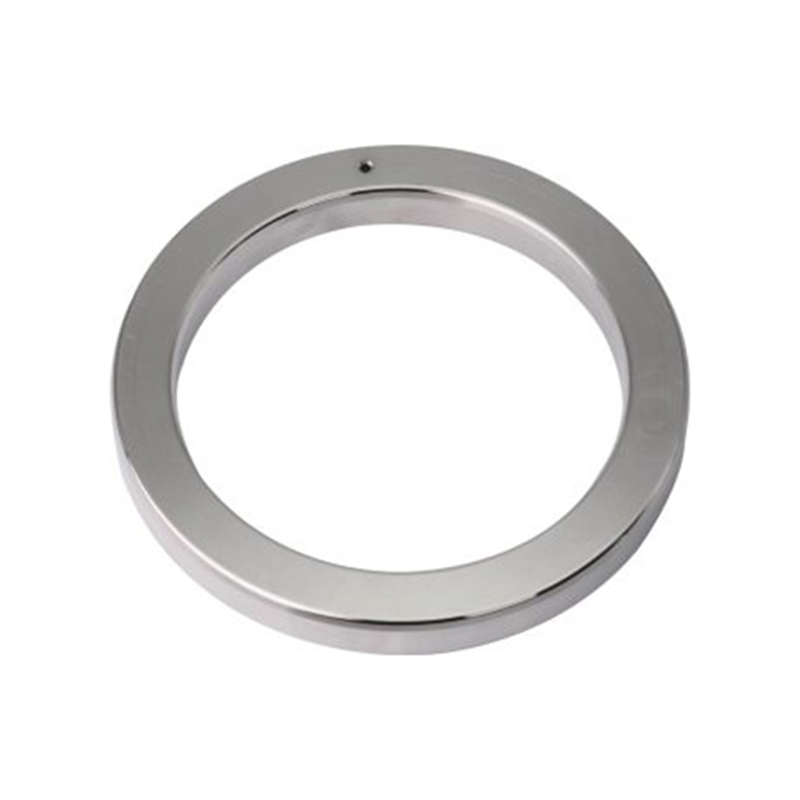
Ordering a BX ring joint gasket requires precise data. A minor dimensional error prevents the flange faces from meeting. This compromises the entire connection. Procurement teams must verify exact structural data before finalizing a purchase order.
You must cross-reference the requested gasket size directly with the equipment. Do not rely solely on old purchasing records or assumptions based on pipe diameter. Check the physical flange markings stamped on the equipment. Review the original engineering drawings. A request for a BX-150 or BX-154 gasket must match the groove machined into the wellhead. Mismatches cause costly project delays during installation and can lead to dangerous blowouts if the wrong ring is forced into a groove.
Most orders align with standard API 6BX flanges. However, buyers must specify if the gasket is for a non-standard application. Custom high-pressure valve bonnets often require bespoke dimensional engineering. A standard ring might not fit a proprietary valve design. Non-standard applications demand specialized machining and custom engineering drawings approved by the manufacturer. You must provide the exact pitch diameter, groove depth, and groove width to the manufacturer when ordering for custom equipment.
Dimensional tolerances dictate the success of the seal. API 6A mandates strict machining tolerances. The pitch diameter, height, and width of the gasket must fall within microscopic margins. Flawless fitment in precisely machined flange grooves is mandatory. If the gasket is slightly too tall, the flanges will not achieve face-to-face contact. If the pitch diameter is incorrect, the pressure-energized seal will fail to activate.
Dimension Parameter | Standard API 6A Tolerance (Inches) | Impact of Out-of-Tolerance Condition |
|---|---|---|
Width of Ring (A) | +0.008 / -0.000 | Prevents proper seating in the groove; blocks face-to-face flange contact. |
Height of Ring (H) | +0.008 / -0.000 | Causes excessive standoff; prevents flanges from bolting together fully. |
Pitch Diameter (P) | +/- 0.006 | Misaligns the sealing faces; pressure-energized mechanism fails to activate. |
Angle of Seating Face | +/- 1/2 degree | Creates point-loading instead of surface contact; leads to galling and leaks. |
Every standard BX gasket features a specific design element. You will notice a small drilled hole passing through the metal ring. This is the pressure equalization hole. It prevents pressure lock during installation and operation. When flanges compress the gasket, air or fluid can become trapped in the bottom of the groove. The vent hole allows this trapped media to escape. You must verify this feature is included in the manufacturer's specification sheet, as a missing vent hole will make it physically impossible to bolt the flanges together face-to-face.
Matching the gasket metallurgy to the process media is a primary engineering task. The wrong material leads to rapid corrosion, galvanic degradation, or severe flange damage. You must evaluate the temperature, chemical exposure, and flange material before selecting a gasket.
Standard materials work well for non-corrosive environments. A soft iron BX gasket is a common choice for basic oil and gas applications where moisture and corrosive chemicals are minimal. Low carbon steel is another standard option for higher pressure ratings in benign environments. These materials have strict maximum Brinell hardness limits. Soft iron must not exceed 90 HB. Low carbon steel must remain under 120 HB. Exceeding these limits destroys the sealing mechanism and damages the equipment.
Harsh environments require advanced metallurgy. Sour gas (H2S) and highly corrosive media destroy standard iron rapidly through sulfide stress cracking. You must select stainless steel or exotic alloys for these applications. Common upgrades include 316L Stainless Steel, Inconel 625, and Duplex alloys. These materials resist chemical attack and maintain structural integrity at extreme temperatures. When operating in sour environments, the material must strictly comply with NACE MR0175 standards.
The hardness differential rule is an absolute engineering mandate. The gasket must always be significantly softer than the flange material. When the flanges are bolted together, the gasket must undergo plastic deformation. It yields and flows into the microscopic imperfections of the flange groove. If the gasket is harder than the flange, the groove will deform instead. Repairing a damaged flange groove requires expensive field machining or complete equipment replacement.
Gasket Material | Maximum Hardness (Brinell / HB) | Typical Application Environment | Corrosion Resistance |
|---|---|---|---|
Soft Iron (D) | 90 HB | Standard oil & gas, non-corrosive media | Low |
Low Carbon Steel (S) | 120 HB | Standard high-pressure systems | Low |
316L Stainless Steel | 160 HB | Corrosive media, moderate temperatures | High |
Inconel 625 | Varies (per NACE) | Sour gas (H2S), extreme temperatures | Excellent |
Differentiating between commodity suppliers and certified manufacturing partners is vital. High-pressure sealing elements are not generic hardware. The qualification process for a vendor must be rigorous to ensure field safety and regulatory compliance.
A qualified ring joint gasket manufacturer must provide fully traceable documentation. API 6A certification is the baseline requirement. You must demand complete Material Test Reports (MTRs) for every batch. These reports prove the chemical composition of the metal, detailing the exact percentages of carbon, manganese, silicon, sulfur, and phosphorus. They also document the physical property test results, including yield strength and tensile strength. Traceability ensures you can track a failed gasket back to the original steel mill heat number.
Assess the internal testing capabilities of your BX gasket supplier. Quality control protocols separate reliable vendors from dangerous ones. The supplier must utilize Coordinate Measuring Machines (CMM) for dimensional verification. They must conduct rigorous hardness testing per API standards on every production run. Ask for their ISO 9001 certification and review their inspection procedures. A vendor that cannot produce a sample MTR or explain their hardness testing methodology should be disqualified immediately.
Protective finishes play a major role in gasket longevity. Bare metal oxidizes rapidly in warehouse storage. Manufacturers apply specific coatings to prevent rust and assist in installation. Zinc plating and cadmium plating are common anti-corrosion finishes. The plating thickness must be strictly controlled, typically between 0.0002 and 0.0005 inches. If the plating is too thick, it will flake off during installation and compromise the seal. PTFE (Teflon) coatings are also popular. PTFE prevents oxidation and provides lubrication. This lubrication helps the gasket seat properly into the groove during flange makeup without galling the metal surfaces.
Procuring the perfect API 6A RTJ gasket is only half the battle. Preventing failure at the point of assembly is equally important. Installation errors account for a significant percentage of high-pressure leaks in the field.
Thorough flange groove inspection is a mandatory first step. Technicians must clean the API 6BX flange groove completely using approved solvents and lint-free cloths. They must inspect the metal surfaces for pitting, scratches, or residual debris. Never use abrasive wire brushes, as they create radial scratches. Even a microscopic radial scratch across the sealing face provides a leak path for 20,000 psi fluid. Damaged grooves must be repaired by certified machinists before any gasket is installed.
Buyers must account for hydrotesting phases during procurement. A high pressure ring joint gasket undergoes permanent plastic deformation upon installation. Procurement teams should order additional metal gaskets specifically for final commissioning. Alternatively, inquire about economical, reusable polyurethane test gaskets. Polyurethane gaskets are excellent for the factory acceptance testing (FAT) phase. They hold test pressures but do not damage the groove, saving expensive metal gaskets for final deployment.
Debunking reusability myths is critical for site safety. The strict single-use rule applies to all metal BX gaskets. You must discard the gasket after the flange is disassembled. The sealing mechanism relies on permanent plastic deformation. A used gasket has already yielded to the shape of the previous groove. Reusing it guarantees a compromised seal and invites catastrophic blowout. Field technicians must physically destroy or tag used gaskets to prevent accidental reuse.
Handling and storage best practices mitigate surface damage risks. Transit and warehousing present numerous hazards. Gaskets thrown into bins will scratch each other. Minor scratches on the sealing face cause high-pressure leaks. Keep gaskets in their original protective packaging or VCI (Volatile Corrosion Inhibitor) bags until the exact moment of installation. Store them flat in a climate-controlled environment to prevent degradation of the protective plating.
Compile the specific flange markings, media requirements, and operating pressures directly from your engineering drawings before contacting vendors.
Determine the exact number of testing phases to calculate the correct quantity of reusable test gaskets and final metal commissioning gaskets.
Request a detailed technical quote and a sample Material Test Report (MTR) from shortlisted manufacturers to verify their traceability standards.
Verify the hardness differential between your selected gasket material and your existing flange equipment to prevent groove damage.
A: R and RX gaskets are used for pressures up to 5,000 psi and do not achieve face-to-face flange contact. BX gaskets are designed for extreme pressures up to 20,000 psi. They require specific API 6BX flanges and are engineered to allow complete face-to-face contact, trapping the gasket securely.
A: No. Metal BX gaskets are strictly single-use. The sealing mechanism relies on permanent plastic deformation. Reusing them guarantees a compromised seal. Economical polyurethane gaskets can be used for factory testing, but a fresh metal gasket is always required for operational service.
A: The drilled vent hole prevents pressure lock. It stops air or fluid from becoming trapped between the bottom of the flange groove and the gasket. Trapped pressure could prevent the gasket from seating properly and block the flanges from achieving face-to-face contact.
A: A soft iron gasket is suitable for standard, non-corrosive environments and basic oil and gas applications. Stainless steel, such as 316L, is required for corrosive media, high operating temperatures, or sour gas applications where iron would rapidly degrade.
A: Yes. While most are standardized for API 6BX flanges, a qualified manufacturer can design and machine non-standard BX gaskets. These are often used for custom applications like high-pressure valve bonnets, provided exact dimensional drawings are supplied by the buyer.
A: When properly installed in a compatible, undamaged API 6BX flange, these high-pressure sealing elements are rated for systems operating up to 20,000 psi. They are specifically engineered for extreme high-pressure, high-temperature environments.
A: Advise buyers to request current API 6A certification and verify ISO 9001 compliance. You must demand comprehensive Material Test Reports (MTRs) for every batch. These reports prove the exact chemical composition and confirm the metal adheres to strict hardness limits.


