
Views: 0 Author: Site Editor Publish Time: 2026-11-17 Origin: Site


High-pressure throttling and frequent-operation applications demand absolute structural integrity. The machining precision of your valves dictates system safety and operational efficiency. The industrial valve market overflows with vendors claiming high performance. Partnering with an unverified factory introduces severe risks to your piping infrastructure. You face fugitive emissions, premature trim wear, and non-compliance with strict piping codes. Moving from project specifications to procurement requires a rigorous vetting framework. You need to look past marketing brochures and audit actual production floors. This guide details how to evaluate a globe valve manufacturer based on engineering capabilities, quality assurance protocols, and supply chain reliability. We break down the exact steps to verify metallurgical control, machining tolerances, and testing transparency before you issue a purchase order.
Verification over Claims: A reliable manufacturer must provide verifiable Material Test Reports (MTRs) and demonstrate in-house Non-Destructive Testing (NDT) capabilities.
Application Alignment: Supplier selection must align with specific operational demands, including pressure drops, flow direction, and specialized trim material requirements for regulating duty.
Certification Baselines: Shortlisted globe valve suppliers must hold current, verifiable certifications for relevant global standards (e.g., API, ASME, ISO, CE/PED).
Risk Mitigation: Evaluating a factory’s internal machining and assembly controls is critical to avoiding the hidden costs of outsourced, substandard component manufacturing.
To procure valves for complex piping systems, you must map exact application requirements before contacting vendors. A mismatch between the valve design envelope and actual field conditions leads to rapid degradation. Establishing rigorous technical baselines ensures the chosen manufacturing partner has proven experience in your specific operational environment.
Follow these steps to define your baseline specifications:
Extract maximum operating pressures and temperatures from the piping and instrumentation diagrams (P&ID).
Identify the specific media characteristics, including corrosivity, particulate content, and viscosity.
Determine the required flow coefficients (Cv) for both minimum and maximum flow states.
Specify the acceptable leakage class based on FCI 70-2 standards for your specific isolation needs.
Define the actuation requirements, noting available instrument air pressure or electrical supply voltages.
Plant operators frequently confuse the application scope of different valve types. You must verify whether the pipeline requires precise throttling—known as regulating duty—or basic on/off isolation. Gate or ball valves handle straight-through isolation efficiently. They fail rapidly if used for throttling. High-velocity media erodes their seating surfaces almost immediately. Globe valves feature a linear motion design. The plug moves perpendicularly away from the seat. This specific geometry allows precise flow control without destroying the sealing interface.
When evaluating a globe valve supplier, demand proof of their expertise in designing specific throttling profiles. They should offer linear, equal percentage, or quick-opening plug characteristics tailored to your control loop requirements. A vendor supplying only standard isolation variants lacks the engineering depth necessary for complex flow regulation. Ask to see their flow curve charts for specific trim designs.
Accurate procurement relies on comprehensive process data. You must outline the maximum operating pressure, temperature extremes, and specific flow rates the valve will encounter. A competent engineering team at the manufacturer uses these parameters to calculate accurate flow coefficients. They must predict cavitation risks in liquid services or aerodynamic noise in gas services. Ignoring these calculations leads to severe vibration and rapid mechanical failure. Poorly specified valves can vibrate so violently they shear their own yoke nuts within a week of startup.
Globe valves are forced-sealing devices. The stem applies significant downward thrust to keep the plug tightly against the seat against system pressure. The manufacturer must determine the exact seating thrust required. This data dictates the correct handwheel gearing or automated actuator sizing. If the vendor cannot provide these thrust calculations, their engineering capabilities fall short.
Fluid dynamics inside a globe valve are inherently turbulent. The media changes direction multiple times. Competent manufacturers mitigate this turbulence through optimized body patterns. The internal geometry directly impacts the pressure drop across the valve.
Body Pattern | Flow Path Characteristics | Pressure Drop | Typical Applications |
|---|---|---|---|
T-Pattern (Standard) | Z-shaped flow path, forces fluid to change direction twice. | Highest | Severe throttling, bypass lines, scenarios where pressure drop is acceptable. |
Y-Pattern | Stem angled at approximately 45 degrees, creating a straighter flow path. | Lowest | High-pressure steam, continuous flow operations, minimizing flow resistance. |
Angle Pattern | 90-degree turn, allowing the valve to function as a pipe elbow. | Medium | Pulsating flow, discharge applications, reducing pipe joints. |
Specify that the manufacturer must demonstrate the ability to cast or forge these complex internal geometries smoothly. Poor casting quality introduces internal ridges. These ridges exacerbate pressure drop and turbulence. You must match the body pattern to the specific flow direction requirements of your piping isometric drawings.
The trim—comprising the stem, plug, and seat—endures the highest mechanical and erosive stress. Evaluating trim options separates good vendors from bad ones. For high-temperature or abrasive media, Stellite hardfacing on the seating surfaces prevents galling and wire-drawing. Manufacturers typically apply Stellite 6 for general wear resistance, while Stellite 21 handles higher temperatures and thermal shock. Corrosive applications require exotic alloys like Monel, Hastelloy, or Duplex stainless steel. Low-pressure chemical lines often utilize PTFE soft inserts for bubble-tight sealing. Graphite packing remains the standard for high-temperature stem sealing.
The manufacturer's capability to achieve precise plug-to-seat lapping directly impacts the leakage class. For tight isolation, you need Class V or Class VI shutoff per FCI 70-2. Achieving this requires lapping the plug and seat together as a matched set. In severe service conditions involving high pressure drops, the manufacturer must offer anti-cavitation cages or multi-stage low-noise trim designs. These specialized trims force the fluid through a series of tortuous paths, breaking down the pressure drop into smaller, manageable stages. This prevents the destructive implosion of vapor bubbles near the seating area. Without them, cavitation destroys a standard plug in days, leaving it looking like it was hit with a shotgun blast.
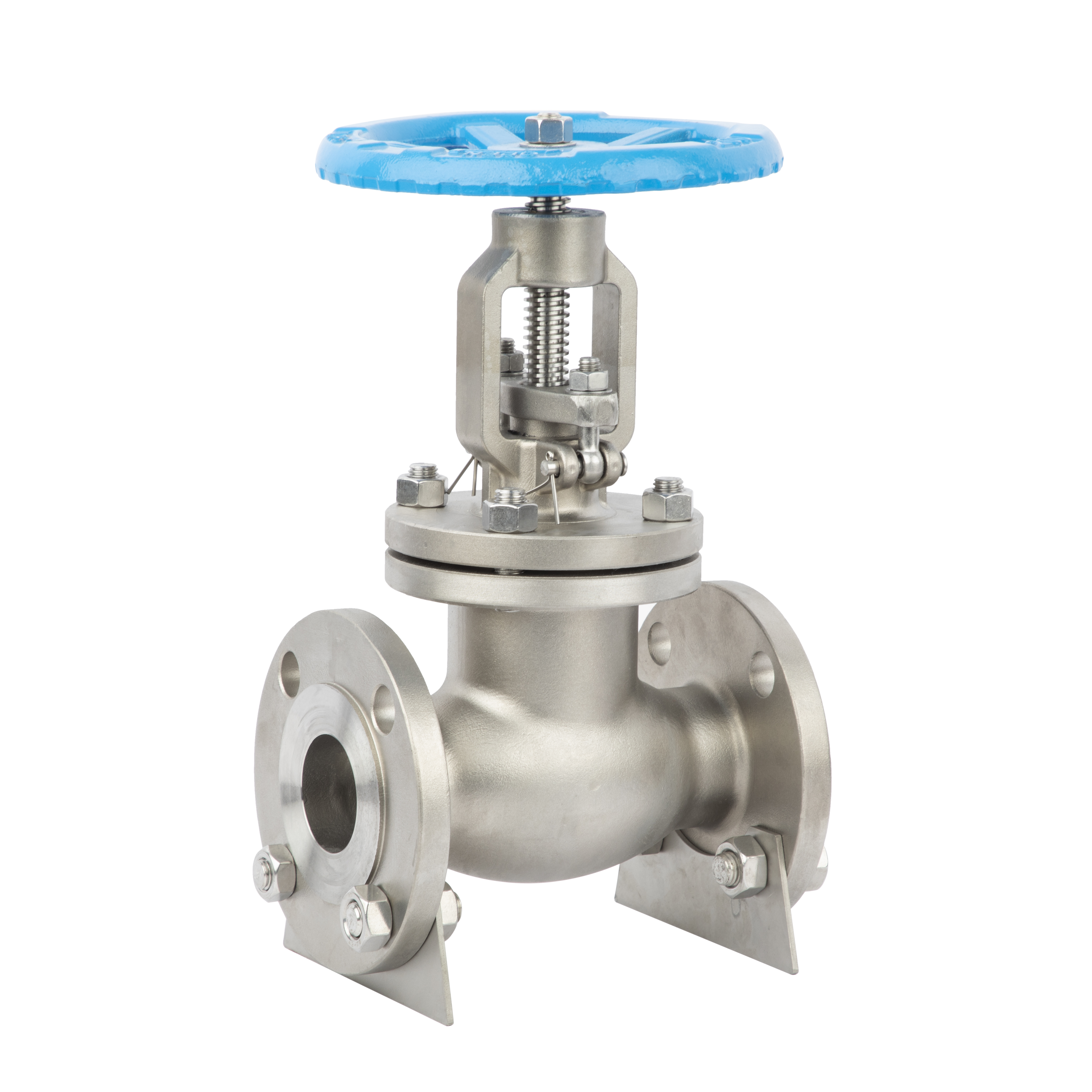
Marketing brochures exaggerate production realities. You need a framework for assessing actual factory floor capabilities. A true industrial globe valve producer maintains strict control over metallurgical integrity and machining precision. Evaluating these dimensions separates genuine manufacturers from mere assemblers.
Examine the machinery used on the shop floor. The manufacturer must utilize advanced CNC machining centers to maintain tight tolerances on stems, plugs, and seats. Manual lathes introduce human error. This leads to inconsistent seating and premature leakage. Concentricity between the stem and the seat is non-negotiable. If the stem is even slightly off-center, the plug will rub against the seat ring unevenly, causing immediate galling. Furthermore, check their surface finish capabilities. The stem area passing through the packing box requires a specific roughness average (Ra) to seal properly without tearing the graphite rings.
You must evaluate their casting and forging supply chain. Do they operate captive foundries, or do they rely on audited third-party metallurgical partners? Captive foundries offer better control over pour temperatures and cooling rates. This oversight prevents porosity and shrinkage cavities in the valve body. Ask to see their foundry's scrap rate and heat treatment furnace calibration records.
Verify their actuator sizing capabilities. A forced-sealing globe valve requires high torque and thrust to close the wide flap against system pressure. Precision is mandatory. Undersized actuators result in passing valves. Oversized actuators bend the stem or crush the seat. The engineering team must use finite element analysis (FEA) to validate stem strength under maximum actuator thrust. Ask for sample FEA reports during your audit.
Pressure-retaining components must never feature ambiguous origins. Detail the requirement for 100% material traceability. The manufacturer must provide EN 10204 Type 3.1 or 3.2 certificates for all pressure boundary parts. These documents trace the chemical composition and mechanical properties back to the original steel mill heat number. Without this documentation, the structural integrity of the valve remains entirely unknown.
Implement Positive Material Identification (PMI) testing as a mandatory checkpoint. PMI utilizes X-ray fluorescence (XRF) scanners to verify the alloy composition on the spot. This prevents out-of-spec materials—such as using standard 304 stainless steel when 316 was specified—from entering your piping system. A reliable manufacturer performs PMI on all incoming raw materials and outgoing finished products.
NDT Method | Target Defect | Primary Application Area |
|---|---|---|
Radiographic Testing (RT) | Internal shrinkage, porosity, casting voids | Cast valve bodies and bonnets |
Ultrasonic Testing (UT) | Subsurface cracks, wall thickness variations | Forged components, critical welds |
Magnetic Particle (MT) | Surface and near-surface cracks | Ferromagnetic materials, weld overlays |
Dye Penetrant (PT) | Surface-breaking defects, micro-fissures | Machined seating surfaces, Stellite hardfacing |
A verified facility operates under strict international codes. Require these non-negotiable certifications for any shortlisted vendor: ISO 9001 for quality management, API 623 (specifically for steel globe valves) or API 600, and ASME B16.34 for pressure-temperature ratings. These standards dictate minimum wall thickness, stem diameter, and testing protocols.
Environmental regulations demand strict fugitive emission controls. Ensure the vendor complies with API 624 or ISO 15848-1 for low-emission stem packing. These type-tests prove the valve can cycle thousands of times without leaking volatile organic compounds (VOCs) into the atmosphere. Always verify the authenticity and current validity of these certificates directly with the issuing bodies. Forged certificates remain a persistent risk in global procurement.
Strategic sourcing requires navigating the trade-offs between domestic availability and international procurement. Evaluating globe valve suppliers on a global scale demands a clear understanding of regional manufacturing strengths and logistical realities. A diversified supply chain protects projects from localized disruptions.
The industrial valve sector in Asia has matured significantly over the past two decades. A modern china globe valve facility has transitioned from low-cost, high-volume production to API-certified, high-specification engineering. Many facilities now utilize automated robotic welding for hardfacing and 5-axis CNC machines for complex trim geometries. This technological shift allows them to compete directly with legacy Western brands on quality. They invest heavily in automated coordinate measuring machines (CMM) to verify machining tolerances down to the micron level.
To identify top-tier manufacturers in this region, look for specific indicators. A reliable globe valve factory will have a documented export history to strict regulatory markets like North America, Western Europe, or the Middle East. Joint ventures with established Western engineering firms often indicate elevated quality control standards. Always mandate independent facility audits by third-party inspectors before placing large orders to verify their actual production capacity. Review their raw material inventory to ensure they actually stock the alloys they claim to machine.
Project timelines rarely accommodate supply chain delays. You must evaluate a supplier's production capacity against your construction or maintenance schedule. Examine their inventory management strategies. Do they maintain stocking programs for standard sizes and materials, or is every order made-to-order? Understanding this dynamic prevents schedule overruns.
Standard cast carbon steel valves might ship within weeks. Forged bodies or exotic alloys require specialized foundry runs. These custom orders extend lead times to 16-24 weeks. Ensure the manufacturer has the scalability to handle surge orders without compromising their quality assurance protocols. Rushing production leads to skipped heat treatment cycles or abbreviated NDT inspections. This compromises valve integrity.
Vendor evaluation must actively seek out warning signs. Identifying red flags early in the auditing process prevents catastrophic failures during plant commissioning. A proactive risk mitigation strategy protects personnel and infrastructure.
A facility lacking comprehensive in-house testing equipment is a severe liability. You cannot rely on visual inspections for pressure-retaining equipment. Specify the exact tests that must be witnessed or documented. Hydrostatic shell testing verifies the structural integrity of the body and bonnet under pressures exceeding the maximum working limit. This test ensures the casting has no hidden voids that could rupture under pressure. The holding time for these tests must strictly follow API 598 based on the valve size.
High-pressure pneumatic seat testing confirms the sealing capability of the plug and seat. The manufacturer must document the exact leakage rates and test durations. Demand torque testing documentation to ensure the valve operates smoothly under full differential pressure without stem binding. For critical applications, require helium leak testing to verify fugitive emission compliance. If a vendor hesitates to allow third-party witness testing, disqualify them immediately.
The relationship with globe valve manufacturers does not end at delivery. Evaluate their warranty terms and responsiveness to field failures. A reliable partner maintains a robust inventory of spare parts, including replacement packing sets, bonnet gaskets, and interchangeable trims. Plant maintenance relies on rapid access to these components.
If a valve fails during startup, the manufacturer must provide immediate troubleshooting support or dispatch field service technicians. Vendors who disappear after the final invoice is paid leave plant operators bearing the full cost of unplanned downtime. Request references from previous clients specifically regarding post-sales support and warranty claim resolution.
The market contains many assemblers posing as true manufacturers. These entities purchase finished components from various uncertified sub-tier vendors and merely bolt them together. This fragments quality control and destroys material traceability. You cannot guarantee the performance of a valve built from unknown parts. When a failure occurs, an assembler cannot trace the root cause back to the foundry or the machining center.
Use targeted auditing questions to uncover unverified outsourcing. Ask to see their in-house welding stations for Stellite hardfacing. Request maintenance logs for their CNC machines. If critical machining, welding, or NDT processes are outsourced, demand the audit reports and ISO certificates of those specific sub-contractors. A transparent manufacturer readily provides their Approved Vendor List (AVL) for sub-tier components. They will also have dedicated incoming inspection areas to verify the dimensions and metallurgy of any outsourced parts before they enter the assembly line.
Take the following actions to secure your procurement process and finalize your vendor selection:
Request detailed Technical Bid Evaluations (TBE) to compare engineering proposals side-by-side.
Demand sample Material Test Reports (MTRs) from recent production runs to verify documentation standards.
Schedule virtual or third-party physical factory audits to inspect CNC capabilities and testing rigs.
Require a documented list of sub-tier suppliers for castings, forgings, and specialized coatings.
A: Prioritize manufacturers holding ISO 9001 for quality management. For product-specific compliance, require API 623 or API 600 for design, and ASME B16.34 for pressure-temperature ratings. To ensure environmental compliance, verify they hold API 624 or ISO 15848-1 certifications for low fugitive emissions stem packing.
A: Globe valves utilize a forced-sealing linear motion where the plug moves perpendicularly from the seat. This design allows for precise throttling and regulating duty without eroding the sealing surfaces. Gate and ball valves are designed strictly for on/off isolation and suffer rapid seat damage if used to regulate flow.
A: Mandate independent third-party facility audits from agencies like SGS or Intertek. Require Positive Material Identification (PMI) testing reports for all pressure-retaining parts. Request historical export documentation to strict regulatory markets like North America or Europe to prove their global compliance capabilities.
A: A factory possesses in-house engineering, CNC machining, welding, and assembly capabilities, offering direct warranty support and custom manufacturing. A distributor holds inventory from various brands for fast delivery but lacks direct control over the manufacturing process, metallurgical quality, or custom engineering modifications.
A: Material traceability prevents catastrophic failures caused by substandard or counterfeit alloys. EN 10204 3.1 certificates trace the chemical and mechanical properties of the valve body back to the original steel mill. This ensures the valve safely handles the specified pressure, temperature, and corrosive media without rupturing.
A: Suppliers conduct hydrostatic shell testing to verify the body's structural integrity under high pressure. They follow API 598 standards for high-pressure pneumatic and hydrostatic seat testing to classify leakage rates. These tests ensure the plug and seat form a tight seal and the body has no hidden casting defects.
A: Standard cast carbon steel or stainless steel valves often ship within 4 to 8 weeks depending on inventory. Valves requiring forged bodies, large diameters, or exotic alloys like Super Duplex and Inconel require custom foundry runs. These specialized orders typically extend lead times to 16 to 24 weeks.


