
Views: 0 Author: Site Editor Publish Time: 2026-09-17 Origin: Site


In high-pressure, high-temperature (HPHT) piping systems and wellhead equipment, the integrity of the flange connection dictates the safety and viability of the entire operation. Selecting the wrong gasket material for a high-pressure environment risks catastrophic seal failure, media leakage, or irreversible damage to expensive flange faces through a process known as coining. Engineers must balance the need for initial plastic deformation to achieve a seal with long-term durability and environmental resistance.
While both soft iron and low-carbon steel are standard materials for ring type joints (RTJ), their distinct metallurgical properties dictate their suitability for specific API and ASME applications. Maximum hardness, physical durability, and corrosion resistance vary significantly between the two. This guide evaluates the technical trade-offs between soft iron and carbon steel to ensure optimal material specification for your next flange connection.
Hardness Differentials Drive Selection: A fundamental rule of RTJ installation is that the gasket must be softer than the flange material to prevent flange face damage. Soft iron is capped at 90 HB, while low-carbon steel is capped at 120 HB.
BX Profile Mechanics: The BX gasket design allows for virtual face-to-face contact of the flanges and relies on pressure-energized sealing, making precise material deformation critical for extreme pressures.
Environmental Vulnerability: Both soft iron and carbon steel are susceptible to corrosion and oxidation; selection must account for the specific media and require appropriate protective coatings (e.g., zinc plating) during storage and transit.
Compliance is Non-Negotiable: Sourcing an API certified BX gasket with fully traceable Material Test Reports (MTRs) is mandatory for mitigating operational risks in high-pressure applications.
High-pressure systems demand flawless sealing mechanics. We define the operational baseline for a high pressure RTJ gasket application primarily through API 6A specifications. These systems handle extreme conditions, often rated for 10,000, 15,000, or even 20,000 psi. Standard flat gaskets or spiral wound gaskets fail instantly under these parameters. A specialized metallic ring is mandatory to contain these extreme forces.
The BX ring joint gasket operates on a pressure-energized sealing mechanism. When you install the gasket, its outer diameter is slightly larger than the flange groove. As you tighten the flange bolts, the gasket undergoes plastic deformation, wedging tightly into the groove. As internal system pressure increases, the wellbore fluid forces the gasket outward against the outer wall of the flange groove. This increases the sealing force proportionally with the system pressure. The higher the pressure, the tighter the seal becomes.
Unlike standard R and RX types, the BX profile allows for virtual face-to-face contact of the mating flanges. Standard R gaskets leave a visible standoff gap between the flange faces, meaning the bolts carry the full hydrostatic end load and the bending moments of the piping system. The BX design eliminates this gap. This face-to-face contact transfers external mechanical loads directly through the solid steel flange block rather than through the gasket itself. This structural advantage makes the BX design mandatory for extreme HPHT environments.
You will notice a small hole drilled through the cross-section of every BX gasket. This is the pressure balance hole. Because the BX profile seals on both the inner and outer diameters simultaneously, fluid can become trapped in the bottom of the flange groove during installation or operation. If this fluid cannot escape, it creates a hydraulic lock, preventing the gasket from seating fully. The balance hole vents this trapped pressure, ensuring the gasket seats properly and maintains its structural integrity.
API 6A and ASME B16.20 govern the dimensional tolerances and material specifications for these gaskets. These standards dictate exact dimensions, angle degrees, and surface finish requirements. A BX gasket requires a highly precise surface finish of 32 microinches Ra. Material selection must strictly align with these standards. Using non-compliant materials or gaskets machined outside of these tight tolerances compromises the pressure-energized seal and immediately voids system certifications.
Commercially pure soft iron is a standard material for RTJ manufacturing. The industry often designates this material with the letter "D". It contains very low levels of carbon (typically less than 0.05%) and minimal alloying elements like manganese, phosphorus, or sulfur. This metallurgical purity gives it unique mechanical properties suited for specific, highly demanding sealing tasks.
The defining characteristic of a soft iron BX ring joint gasket is its extreme softness. API and ASME standards cap the maximum allowable hardness at 90 Brinell (HB), which equates to approximately 56 Rockwell B (HRB). Manufacturers engineer this extreme softness into the product intentionally through controlled annealing processes. The fundamental rule of flange makeup is that the gasket must yield before the flange does.
This lower hardness ensures rapid, reliable plastic deformation. When you torque the flange bolts, the soft iron flows into the micro-imperfections and machining marks of the flange groove. This creates a superior initial seal. It requires less bolt load to achieve this deformation compared to harder materials. If the flange groove has minor scratches, pitting, or wear from previous operations, soft iron is significantly more forgiving and more likely to fill those voids effectively than a harder steel alloy.
You should specify soft iron in several distinct field scenarios. It is the preferred choice when mating with relatively soft flange materials, such as older carbon steel flanges that may have lost some of their surface hardness over time. It works exceptionally well in non-corrosive media environments where chemical attack is not a concern. Engineers often use soft iron for temporary hydro-testing setups where achieving a rapid, reliable seal is the priority, and the gasket will be discarded immediately after the test. If your application prioritizes maximum initial sealing over long-term mechanical resilience, soft iron is the correct specification.
Low-carbon steel is the other primary material for standard RTJ applications. The industry designates this material with the letter "S". It contains slightly more carbon (typically up to 0.20%) and other alloying elements than pure soft iron. This alters its mechanical behavior, increasing its yield strength while keeping it within acceptable hardness limits for flange sealing.
A carbon steel BX ring joint gasket has a higher maximum allowable hardness. Standards cap it at 120 Brinell (HB), or approximately 68 Rockwell B (HRB). While harder than soft iron, it remains significantly softer than standard alloy steel flanges (which typically range from 150 to 200 HB). This maintains the necessary hardness differential to protect the flange groove during makeup.
The slightly higher carbon content provides increased structural durability. The gasket is less prone to handling damage on the job site. Dropping a soft iron gasket on a steel deck can easily dent the sealing face, ruining it instantly. Carbon steel withstands rougher handling during field installation. Furthermore, carbon steel offers a measurable improvement in resistance to certain types of chemical attack and mechanical wear compared to pure soft iron, making it more suitable for long-term installations.
Carbon steel is the standard choice for general hydrocarbon processing, refineries, and standard wellhead applications. It performs well when mating with harder alloy flanges, such as 4130 or 4140 steel commonly used in API 6A equipment. If the environment requires higher mechanical resilience, resistance to minor handling impacts, and longevity in standard oil and gas service, choose low-carbon steel. It bridges the gap between the extreme softness of pure iron and the high durability of stainless steel alloys.
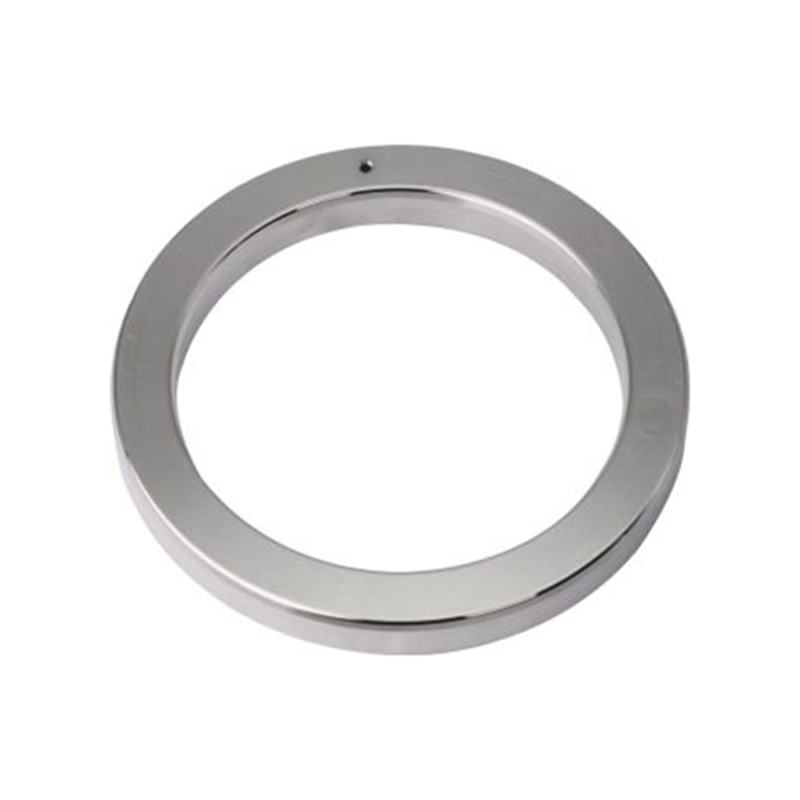
Choosing between these two materials requires a systematic evaluation of your specific operating conditions. You must analyze flange compatibility, media chemistry, and system pressures to make an informed engineering decision.
You must maintain a minimum hardness differential between the flange and the gasket. Industry best practices dictate a differential of at least 30 to 50 HB. The gasket must be the sacrificial component in the connection. If the gasket is too hard, it will coin the flange. Coining is the permanent, physical deformation of the flange groove. Repairing a coined flange requires taking the system offline, cutting the pipe, and re-machining the face, or replacing the flange entirely—both of which are incredibly expensive and time-consuming.
Soft iron, capped at 90 HB, presents the lowest risk of coining. It is safe for almost all flange metallurgies, including softer carbon steels. Carbon steel, capped at 120 HB, requires verification. You must ensure your flange material is significantly harder than 120 HB before installing a carbon steel ring. If you are working with older, unverified flanges, soft iron is the safer default choice to prevent accidental coining.
Both materials are vulnerable to corrosion. They perform poorly in the presence of moisture, sour gas (H2S), and acidic compounds. However, carbon steel holds a slight edge in durability against mild chemical exposure. Soft iron rusts and degrades rapidly if exposed to corrosive elements, leading to pitting on the sealing face and eventual leak paths.
You must recognize the upgrade threshold. Both soft iron and carbon steel fail in severe environments. If your media contains high levels of H2S, chlorides, or strong acids, you must upgrade your material specification. You will need to specify stainless steel (e.g., 316SS) or exotic alloys (e.g., Inconel 625 or 825). Do not push soft iron or carbon steel beyond their chemical limits, as this will result in rapid galvanic corrosion and catastrophic seal failure.
Both materials share similar temperature ratings. They are generally rated for continuous use up to 500°F (260°C). Beyond this threshold, oxidation becomes a critical failure point. The metal degrades, loses its mechanical properties, and the seal weakens. For higher temperatures, you must transition to stainless steels or specialized high-temperature alloys.
Regarding pressure, the BX profile's pressure-energized nature performs identically across both materials. Assuming you achieve the initial deformation seal during bolt makeup, both soft iron and carbon steel will hold extreme pressures up to 20,000 psi. The material choice does not change the pressure rating of the BX profile itself; the profile geometry dictates the pressure containment capability.
Technical Specification | Soft Iron (Type D) | Low Carbon Steel (Type S) |
|---|---|---|
Maximum Hardness | 90 HB / 56 HRB | 120 HB / 68 HRB |
Carbon Content | < 0.05% | < 0.20% |
Coining Risk | Very Low (Safe for soft flanges) | Low (Requires verification of flange hardness) |
Handling Durability | Low (Highly prone to scratching and denting) | Moderate (More resilient to field impacts) |
Maximum Operating Temperature | 500°F (260°C) | 500°F (260°C) |
Initial Sealing Ease | Excellent (Flows easily into imperfections) | Good (Requires slightly higher bolt load) |
Corrosion Resistance | Poor (Requires heavy zinc plating) | Fair (Slightly better than soft iron) |
Specifying the correct material is only the first step. Poor handling and improper installation will cause even the best gasket to fail. You must mitigate several implementation risks to ensure a leak-free connection.
Both soft iron and carbon steel are highly susceptible to atmospheric corrosion. They will rust during shipping, storage, and staging if left unprotected. A rusted sealing face will not seal properly, as the iron oxide creates a porous, uneven surface that prevents metal-to-metal contact.
To mitigate this, you must specify protective coatings. Manufacturers typically apply zinc plating or cadmium plating to these gaskets, usually at a thickness of 0.0002 to 0.0005 inches. Alternatively, they may use specialized rust-preventative oils. You must store these gaskets in climate-controlled environments. Keep them in their original VCI (Volatile Corrosion Inhibitor) packaging until the exact moment of installation. Do not open the packaging to inspect the gasket days before the installation, as ambient humidity will immediately begin the oxidation process.
The BX gasket requires precise bolt loads to achieve the necessary plastic deformation. Under-torquing fails to deform the gasket. The virtual face-to-face contact will not occur, and the seal will leak as soon as pressure is introduced. Over-torquing crushes the gasket excessively, potentially coining the flange groove, or yields the flange bolts, compromising the structural integrity of the entire connection.
Mitigate this by strictly adhering to API bolting procedures. Use calibrated hydraulic torque wrenches for high-pressure flanges. Follow a strict torque sequence:
Clean and inspect all flange faces, studs, and nuts.
Apply an approved thread lubricant to the studs and nut faces.
Hand-tighten all nuts to ensure the flange faces are parallel.
Apply 30% of the final torque value using a crisscross (star) pattern.
Apply 60% of the final torque value using the same crisscross pattern.
Apply 100% of the final torque value using the crisscross pattern.
Perform a final circular pass at 100% torque to ensure all bolts are evenly loaded and face-to-face contact is achieved.
A dangerous misconception exists in the field that metallic ring joints can be reused if they look undamaged. This is entirely false. Plastic deformation is a one-time event.
When you torque a soft iron or carbon steel gasket, it undergoes work-hardening. Its metallurgical structure changes at the microscopic level. If you remove it and try to reuse it, the gasket is now significantly harder than it was originally. It will no longer deform properly under the same bolt load. Worse, because it is harder, reusing it drastically increases the risk of coining the flange groove. All BX gaskets must be replaced after the connection is broken. Cut the old gasket in half or throw it in the scrap bin immediately to prevent accidental reuse.
Your supply chain dictates the reliability of your piping systems. You must evaluate your BX gasket supplier rigorously to ensure technical compliance and prevent counterfeit materials from entering your facility.
You must demand full traceability for every metallic ring joint. Sourcing an API certified BX gasket requires verifying the paperwork before the parts ever reach the field. The supplier must provide Material Test Reports (MTRs) for every batch. These reports confirm the exact chemical composition (carbon, manganese, sulfur levels) and prove the Brinell hardness meets the API 6A specifications. The heat number stamped on the side of the gasket must match the heat number on the MTR exactly.
Verify that the ring joint gasket manufacturer holds an active API 6A license. They should also operate under a strict ISO 9001 quality management system. Counterfeit or poorly documented gaskets introduce unacceptable risks into high-pressure operations, potentially leading to blowouts and severe safety incidents.
Evaluate the supplier's machining capabilities. ASME B16.20 dictates stringent dimensional tolerances for the pitch diameter, ring height, and angle of the sealing faces. The surface finish is critical. A BX gasket requires a maximum surface roughness of 32 microinches Ra. If the supplier's CNC lathes cannot consistently hold this tolerance, the gasket will not seal against the flange groove, regardless of how much torque you apply. Ask for sample inspection reports to verify their machining accuracy and quality control procedures.
Audit your current flange metallurgy to confirm the exact Brinell hardness of your mating surfaces before specifying a gasket material.
Calculate the hardness differential to ensure your chosen gasket remains at least 30 HB softer than the flange to prevent coining.
Review your media corrosivity and operating temperatures to confirm neither soft iron nor carbon steel exceeds its 500°F limit or chemical resistance threshold.
Specify required protective coatings, such as zinc plating, on all purchase orders to prevent storage rust and atmospheric corrosion.
Procure gaskets only from certified manufacturers who provide fully traceable Material Test Reports matching the heat stamps on the physical gaskets.
A: The maximum allowable hardness for a commercially pure soft iron BX ring joint gasket is 90 Brinell (HB), which is approximately 56 Rockwell B (HRB). This extreme softness ensures the gasket deforms easily into the flange groove without damaging the mating surfaces during installation.
A: The maximum allowable hardness for a low-carbon steel BX ring joint gasket is 120 Brinell (HB), or roughly 68 Rockwell B (HRB). It is harder than soft iron, providing better handling durability, but must still remain softer than the flange material to prevent coining.
A: Type R gaskets leave a standoff gap between flanges and are not pressure-energized. Type RX gaskets fit the same grooves as R but utilize a pressure-energized design. Type BX gaskets are pressure-energized and designed specifically for virtual face-to-face flange contact in extreme high-pressure systems.
A: BX gaskets seal on both their inner and outer diameters simultaneously. This dual sealing action can trap fluid or pressure in the bottom of the flange groove. The pressure balance hole allows this trapped pressure to equalize, preventing hydraulic lock and ensuring the gasket seats fully.
A: No. Metallic ring joint gaskets undergo plastic deformation and work-hardening during initial installation. If reused, the gasket will be harder than its original state, which prevents proper sealing and significantly increases the risk of damaging the flange groove.
A: Both materials are highly susceptible to atmospheric corrosion. Protect them by specifying factory-applied coatings like zinc or cadmium plating. Store them in climate-controlled environments inside their original Volatile Corrosion Inhibitor (VCI) packaging until the exact moment of installation.
A: You should upgrade when operating temperatures exceed 500°F (260°C), or when the system media contains highly corrosive elements like sour gas (H2S), strong acids, or high chloride concentrations. In these severe environments, specify materials like 316SS or Inconel to prevent rapid degradation.


