
Views: 0 Author: Site Editor Publish Time: 2026-10-26 Origin: Site


Piping connection choices carry massive operational stakes in hygienic processing environments. Incorrect specifications lead directly to product contamination, Clean-In-Place (CIP) failures, and unplanned downtime. Process engineers and facility managers face a strict balancing act every day on the plant floor. You must ensure absolute microbiological safety while managing system maintenance, modularity, and installation timelines. A single dead leg or misaligned gasket can ruin an entire batch of pharmaceutical product or beverage. Selecting the right sanitary pipe fittings requires a rigorous, field-tested evaluation. We will examine three primary connection types: clamp, weld, and union. We base this evaluation on pressure ratings, maintenance frequency, and regulatory standards. By understanding the mechanical limits and hygienic profiles of each connection, you can design piping runs that protect product purity and streamline daily operations.
Sanitary clamp fittings (often referred to as Tri-Clamp) offer the highest modularity and fastest teardown for systems requiring frequent inspection, but are vulnerable to gasket degradation and pressure limitations.
Sanitary weld fittings provide the ultimate structural integrity and hygienic baseline for permanent, high-pressure lines, though they sacrifice system flexibility.
Sanitary union fittings (including DIN and SMS standards) bridge the gap, offering robust, semi-permanent connections ideal for high-vibration environments and European equipment integration.
Selecting a reliable sanitary pipe fittings supplier requires strict verification of Material Test Reports (MTRs) and surface finish (Ra) compliance to mitigate compliance risks.
Hygienic processing demands strict baseline requirements to prevent microbial growth. You must eliminate dead legs where product can stagnate. Industry standards dictate a maximum L/D (Length to Diameter) ratio of 2:1 for any branch or tee. Stagnant zones breed bacteria and ruin entire batches. Piping systems require smooth transition points across all joints. Any internal crevice acts as a trap for soil and microbes. Your connections must maintain full compatibility with CIP and Steam-In-Place (SIP) protocols. Cleaning fluids need turbulent flow, typically exceeding 1.5 meters per second, across all internal surfaces to provide adequate mechanical scouring. Steam sterilization requires consistent temperature distribution without cold spots. If a connection creates a flow restriction, cleaning efficacy drops immediately. You evaluate every fitting based on its ability to drain completely. Gravity draining prevents pooling after a CIP cycle concludes, ensuring no chemical residue remains in the line.
Mechanical limits dictate connection viability in the field. Thermal cycling places immense stress on piping joints. Rapid shifts from 4°C cold product to 121°C SIP steam cause severe metal expansion and contraction. This movement compromises weak seals over time. Elastomers behave differently under these thermal loads; for example, PTFE gaskets may experience cold flow, while EPDM maintains its memory but degrades under high-fat conditions. Line pressure represents another variable. High-pressure transfer lines demand connections that resist blowout. Equipment vibration adds continuous mechanical stress. Pumps, homogenizers, and centrifuges transfer kinetic energy down the piping run. You must match the connection type to these physical realities. A fitting rated for static holding tanks will fail on a high-vibration pump discharge line.
Assess how often operators open the line. Some systems require daily manual cleaning. We call this Clean-Out-of-Place (COP). COP demands fast, tool-free disassembly. Other lines remain sealed for years. Process reconfiguration also drives modularity needs. Pilot plants and multi-product facilities change layouts frequently. Dedicated utility lines never move. You establish a framework for maintenance frequency by evaluating the following factors:
Identify the primary cleaning protocol (CIP versus COP) for the specific piping zone.
Determine the inspection frequency required by your quality control department.
Assess the likelihood of future process reconfigurations or equipment upgrades.
Evaluate the physical accessibility of the piping run for maintenance personnel.
High-frequency teardowns point toward quick-release mechanisms. Zero-frequency maintenance allows for permanent joining methods. Balancing labor time against system integrity guides your specification process.
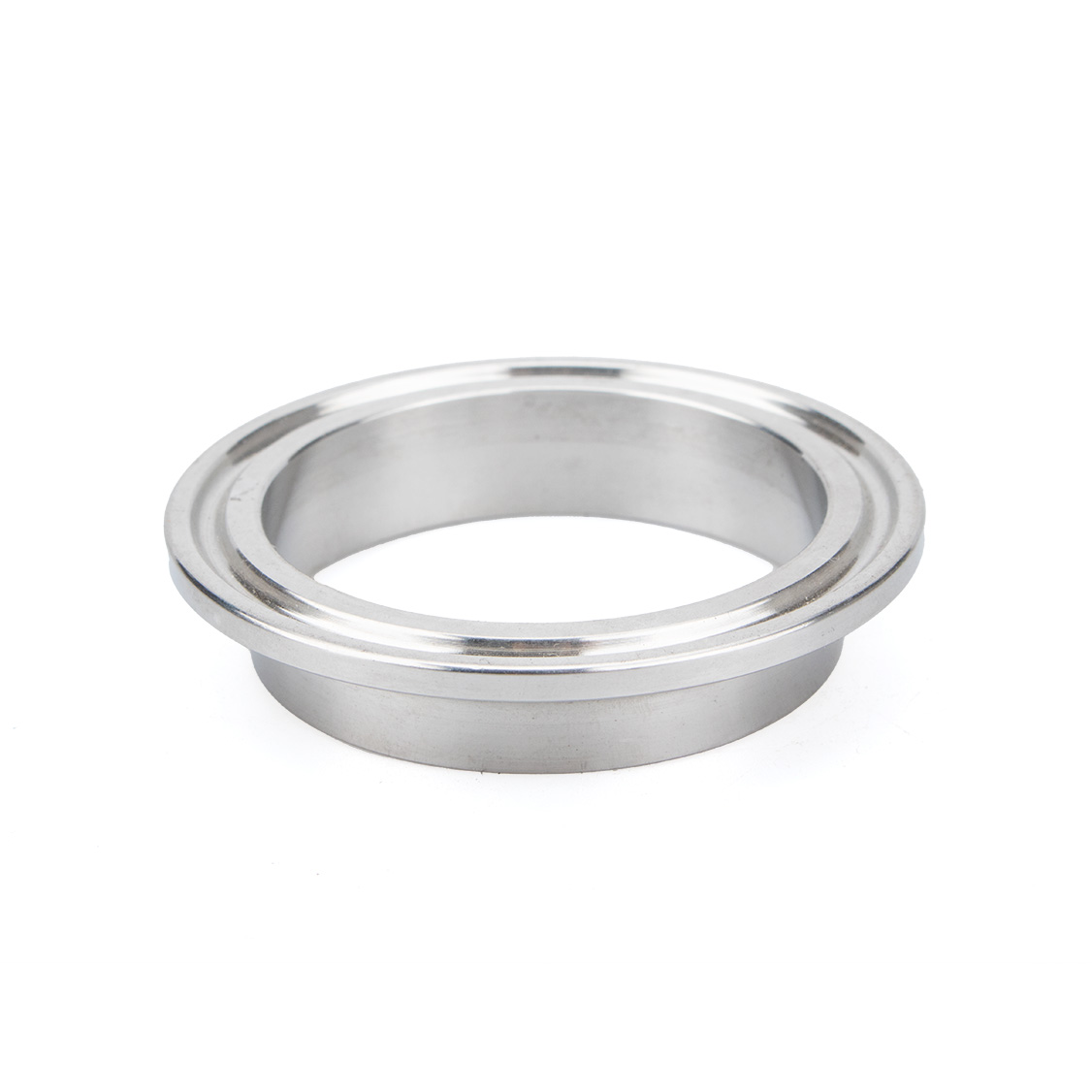
The sanitary clamp connection relies on a simple three-piece assembly. First, you have two flanged ends. We call each end a sanitary pipe ferrule. These weld directly to the pipe or equipment port. Second, an elastomeric gasket sits between the ferrule faces. The gasket features a specific profile to align the two halves perfectly. Third, an external clamp wraps around the flanges. This clamp compresses the joint. The compression forces the gasket to seal flush with the internal pipe wall. A proper seal creates zero contamination collection sites. The internal bore remains completely smooth. Gasket material selection depends heavily on the process fluid. EPDM works well for general aqueous solutions, while FKM or Silicone handles higher temperatures and specific chemical exposures.
Clamp fittings dominate specific operational zones across multiple industries. You see them everywhere on pharmaceutical transfer panels and bioreactor harvest lines. Food and beverage transfer lines rely on them heavily for routing product between tanks. Craft and home brewing setups use them almost exclusively. They offer unmatched speed. Operators can break a line apart in seconds. Daily teardowns become highly efficient. Frequent hose changes require this level of modularity. Rapid reconfigurations take minutes instead of hours. When a process demands flexibility, sanitary clamp fittings deliver the best operational outcome. They allow operators to visually inspect lines and swab for ATP testing without calling in a maintenance mechanic.
Clamp connections bring specific field risks that operators must manage. Over-tightening represents the most common failure. Operators often crank down on the clamp wingnut. This forces the elastomer to extrude directly into the product stream. Extruded gaskets restrict flow and create a microscopic shelf where bacteria multiply. Conversely, under-tightening causes immediate leaks. Thermal cycling exacerbates both issues as the gasket expands and contracts. You mitigate these risks through standardization. Recommend torque-limiting clamps for critical lines. These clamps prevent operators from exceeding the specified compression force. Implement routine elastomer replacement schedules. Gaskets degrade from chemical exposure and steam. Replace them before they fail, not after.
Sanitary systems strictly mandate butt welds. A butt weld joins two beveled pipe ends directly together. The welder achieves full penetration through the tube wall. This creates a perfectly smooth internal finish. You grind and polish the internal seam to match the surrounding pipe. Sanitary standards strictly avoid socket welds. A socket weld involves inserting a pipe into a recessed fitting. This geometry creates an unavoidable internal crevice between the outside of the pipe and the inside of the fitting. Fluid stagnates in this recess. Bacteria colonize the trapped fluid. CIP protocols cannot clean socket welds effectively because the turbulent flow cannot reach inside the gap. Therefore, hygienic piping relies exclusively on butt welding.
Achieving a sanitary weld requires precision and consistency. Autogenous orbital welding represents the industry gold standard. An automated weld head clamps around the joint. A tungsten electrode rotates around the pipe at a controlled speed. The machine controls amperage, shielding gas, and travel speed perfectly. Welders run test coupons at the start of every shift to verify the program. This produces repeatable, crevice-free internal weld seams. Orbital welding meets stringent ASME BPE standards consistently. Manual TIG welding introduces human error. Hand-welded joints often suffer from incomplete penetration or excessive sugaring (oxidation) if the argon purge fails. You use manual welding only when physical clearance prevents orbital weld head placement.
Certain applications make sanitary weld fittings non-negotiable. High-pressure utility lines require permanent structural integrity to prevent catastrophic blowouts. Water for Injection (WFI) loops demand zero dead legs and absolute sterility, making gaskets a liability. Hazardous fluid transfer lines cannot risk accidental disconnection by an operator. Inaccessible piping runs behind walls or in ceilings must be welded. If operators cannot reach a joint for inspection, you weld it. Welded systems provide the ultimate hygienic baseline. They eliminate gaskets entirely. No gaskets mean no degradation, no extrusion, and no replacement schedules.
Welded systems sacrifice all flexibility. Once installed, you cannot modify the line easily. Upfront labor hours run very high. Orbital welding requires specialized equipment and highly trained technicians. Rigorous inspection requirements add to the timeline. You must perform boroscopy on internal seams to verify full penetration and lack of oxidation. You must passivate the entire system using nitric or citric acid to restore the chromium oxide layer and prevent corrosion. Mitigate these risks through meticulous planning. Advise thorough 3D modeling prior to fabrication. Generate accurate isometric drawings. Measure twice, weld once. Spooling sections off-site in a controlled fabrication shop reduces field welding and accelerates installation.
Sanitary unions provide a highly secure, metal-backed seal. The mechanism differs entirely from external clamps. A union utilizes a heavy-duty threaded nut. This nut draws a male ferrule and a female ferrule together. A captive gasket sits between them. As you tighten the nut, the ferrules compress the gasket. The threaded design provides immense mechanical advantage. It resists blowout far better than a standard hinged clamp. The metal-to-metal contact outside the gasket zone prevents over-compression. This ensures the internal bore remains flush and hygienic, regardless of how hard the operator tightens the nut.
You must distinguish sanitary unions from standard industrial couplings. Standard threaded couplings require you to rotate the adjoining pipework to assemble the joint. This proves impossible in fixed piping runs where both ends are anchored. Sanitary unions solve this problem. They allow for easy disconnection and reconnection of pipes without rotating the pipe itself. You only rotate the union nut. This makes them ideal for tight spaces. They work exceptionally well on low-pressure utility lines and instrument air drops within cleanrooms. They offer semi-permanent security with realistic maintenance access.
Union fittings follow specific regional standards that dictate their thread pitch and gasket geometry. DIN sanitary pipe fittings originate in the German market. They feature a round slotted nut and a D-shaped gasket that seats deeply into the ferrule. SMS standards come from Sweden, utilizing a flat gasket and a round nut. RJT standards dominate the UK dairy sector, featuring an O-ring design that forgives slight pipe misalignments. You find these unions prevalent in European-manufactured equipment. Dairy processing relies heavily on union connections due to their robust nature. High-vibration environments, like homogenizer discharges, use sanitary union fittings because threaded nuts resist vibrating loose better than clamp wingnuts.
Thread galling represents the primary risk with union fittings. Stainless steel threads tend to cold-weld together under pressure and friction. When a nut galls, it seizes completely. You often have to cut the fitting off the pipe, destroying the component. Unions also present a slightly more complex cleaning profile compared to clamp fittings. The captive gasket requires precise seating during assembly. Recommend anti-galling compounds on all external threads. Train operators on specific wrenching protocols. Never use excessive force or impact tools on sanitary union nuts. Hand-tighten first, then apply a specialized spanner wrench to achieve the final seal.
Evaluating connection types requires looking at the entire lifecycle of the piping system. Welding presents a low initial material requirement. You buy raw tubing and basic weld fittings. However, the labor investment is massive. Orbital welding, boroscopy, and passivation require specialized contractors and extended facility downtime. Conversely, clamps and unions carry a higher component expense. You purchase ferrules, gaskets, and clamps for every joint. Yet, assembly takes minutes. You save drastically on installation labor. Long-term operations shift the math again. Welded lines require zero ongoing maintenance. Clamped systems require continuous gasket replacement. You must factor these ongoing maintenance cycles into your facility planning.
Future facility upgrades depend heavily on your initial connection choices. Clamped systems offer ultimate scalability. You can easily add tees, valves, or sight glasses. You simply unclamp a spool piece and insert the new component. Facility expansion happens rapidly with minimal downtime. Welded systems severely restrict scalability. Adding a single branch requires cutting the pipe. You must purge the line, weld the new fitting, polish the seam, and re-passivate the entire loop. This forces extended process shutdowns. Unions sit in the middle. They allow for modular equipment swap-outs but remain less universal than standard clamp fittings when sourcing off-the-shelf components.
Industry standards dictate connection viability. The FDA, 3-A Sanitary Standards, and ASME BPE provide strict guidelines. Welded systems easily meet the highest ASME BPE criteria for bioprocessing. They offer the lowest risk during validation audits. Clamp fittings meet 3-A standards for food and dairy, provided you maintain the gaskets properly. Auditors will check your gasket replacement logs to ensure compliance. Union fittings also meet 3-A standards, but auditors may scrutinize threaded connections in high-risk pharmaceutical zones if the threads are exposed to the environment. Your choice directly impacts audit readiness. Match the connection type to the regulatory burden of your specific industry.
Connection Type | Installation Labor | Modularity | Vibration Resistance | Best Application |
|---|---|---|---|---|
Sanitary Clamp | Low | Very High | Low | Frequent teardown, modular skids, transfer panels |
Sanitary Weld | Very High | None | Very High | Permanent lines, WFI loops, high pressure headers |
Sanitary Union | Medium | Medium | High | European equipment, dairy processing, homogenizers |
Sourcing hygienic components carries strict compliance requirements. A reputable sanitary pipe fittings supplier must provide full material traceability. You require Material Test Reports (MTRs) for every fitting. MTRs document the exact chemical composition of the steel lot. They provide the heat numbers stamped on the fittings, allowing you to trace the metal back to the mill. Alloy selection dictates corrosion resistance. Specify 304 or 304L stainless steel for standard brewing and dairy applications. Step up to 316L stainless steel for pharmaceutical processing. Highly corrosive environments, like those using harsh CIP chemicals or high chloride concentrations, demand 316L to prevent pitting and rouge formation.
The internal surface finish defines the hygienic grade of the fitting. We measure surface roughness in micro-inches (Ra). Verify that your supplier guarantees the specified Ra finish. Standard food-grade fittings often require a 20 Ra mechanical polish. Pharmaceutical applications demand a 15 Ra finish. Many high-purity systems require electropolishing. Electropolishing uses an anodic dissolution process to remove microscopic peaks and valleys on the metal surface. It creates a mirror-like finish that resists bacterial adhesion and improves corrosion resistance. Inspect incoming fittings carefully. Poor polishing leaves directional scratches. These scratches harbor microbes and fail validation protocols.
Supply chain reliability keeps projects on schedule. Partner with suppliers who hold deep inventory of standard sizes. Delays in receiving basic elbows or tees halt entire installations. Beyond standard parts, evaluate their custom fabrication capabilities. A strong supplier offers custom spool fabrication. They can weld complex manifolds in their controlled shop environment. This reduces your on-site welding requirements. Shop welding generally yields higher quality and consistency than field welding because the environment is controlled and purge gases remain stable. Consolidating standard inventory and custom fabrication with one supplier streamlines your procurement process.
No single facility relies entirely on one connection type. Optimal hygienic piping design utilizes a hybrid approach. You base your choices on specific zone requirements. You mix permanent structural integrity with strategic modularity. Understanding the mechanical limits of clamps, welds, and unions ensures operational success. You protect product purity while controlling maintenance labor and minimizing downtime.
Use this quick decision matrix for your facility. Specify welds for permanence, high pressure, and inaccessible areas. Specify clamps for modularity, frequent COP cleaning, and flexible hose stations. Specify unions for high-vibration pump discharges or specific European equipment mating. Match the fitting to the physical reality of the process line.
Audit your current piping systems to identify frequent leak points or difficult CIP validation zones.
Consult with process engineers to define exact pressure, temperature, and vibration parameters for upcoming installations.
Request MTR samples and surface finish documentation from prospective suppliers to verify compliance capabilities.
Establish a preventative maintenance schedule specifically for elastomeric gasket replacement in your clamped zones.
A: Clamp fittings use an external hinged clamp to compress two flanged ferrules around a gasket. They offer fast, tool-free teardown. Union fittings use a heavy-duty threaded nut to draw a male and female ferrule together over a captive gasket. Unions provide higher vibration resistance but take slightly longer to disassemble.
A: Yes. Properly executed orbital butt welds offer the best CIP performance of any connection type. They create a perfectly smooth, continuous internal bore. Because they lack crevices, recesses, or gaskets, they eliminate the areas where bacteria typically hide during cleaning cycles.
A: Replacement frequency depends on the operating environment. Lines subjected to daily steam sterilization (SIP) or harsh caustic CIP chemicals may require monthly replacement. Standard process lines might only need annual replacement. Establish a preventative maintenance schedule based on visual inspection for extrusion, cracking, or hardening.
A: DIN fittings originated in the German market. They feature a robust threaded design with a round slotted nut. They are commonly used in European-manufactured processing equipment, dairy plants, and breweries. Their threaded nature makes them highly resistant to loosening under equipment vibration.
A: A ferrule is the flanged end-piece that is welded directly to a pipe, valve, or equipment port. It provides the mating surface required to create a clamp or union connection. The flat face of the ferrule compresses against the gasket to form the hygienic seal.
A: Socket welds require inserting a pipe into a recessed fitting. This geometry inherently creates an internal crevice between the pipe wall and the fitting recess. Fluid stagnates in this gap, allowing bacteria to grow. CIP fluids cannot penetrate this crevice, making socket welds unsanitary.
A: Focus on compliance and traceability. A reliable supplier must provide Material Test Reports (MTRs) for all stainless steel components. They must guarantee strict internal surface finish (Ra) quality control. Ensure their products meet industry-standard certifications like 3-A Sanitary Standards or ASME BPE for your specific application.


